
6 min read

Farmland’s next decade to reward execution over ownership

Farmland’s next decade to reward execution over ownership

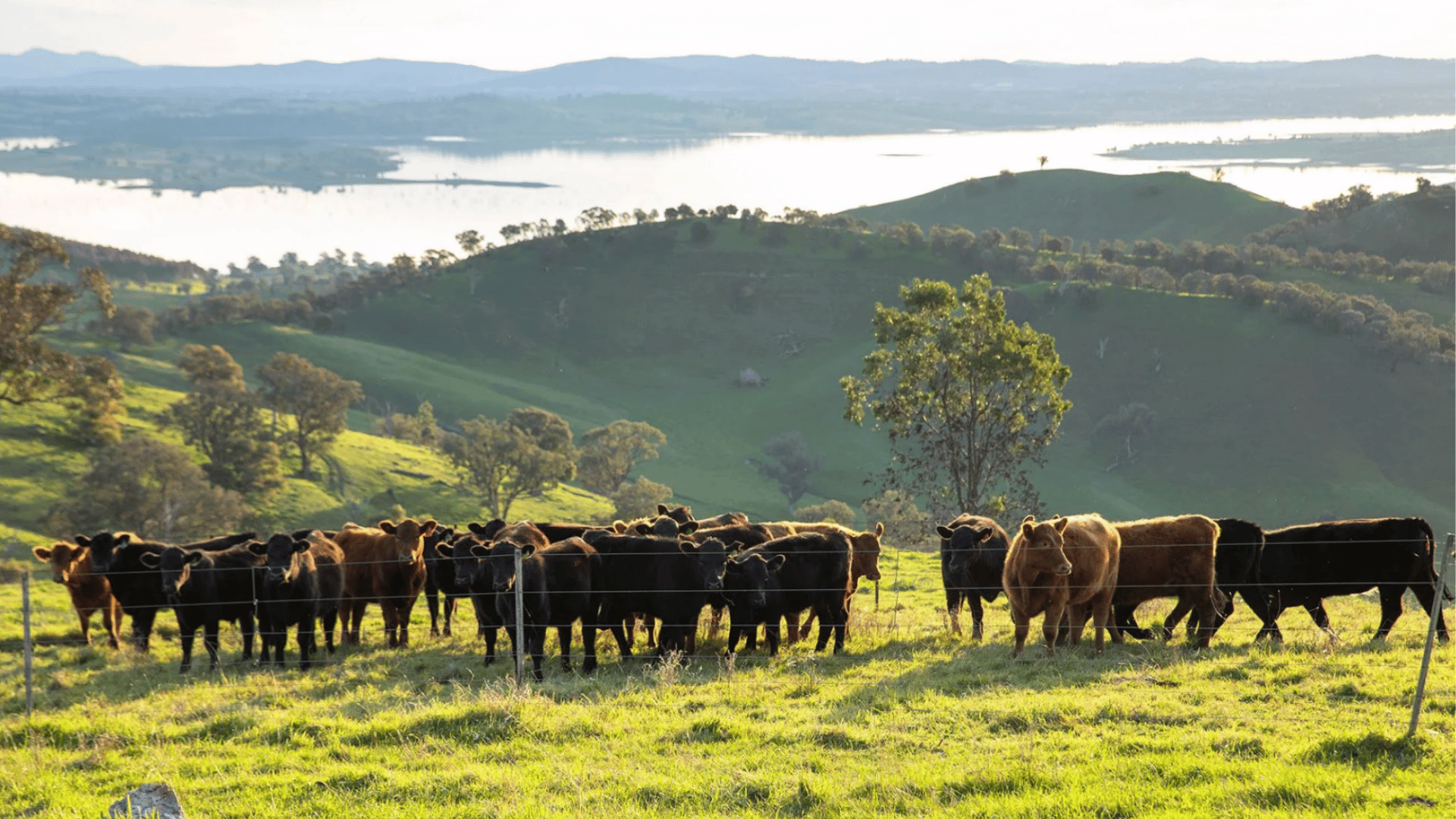
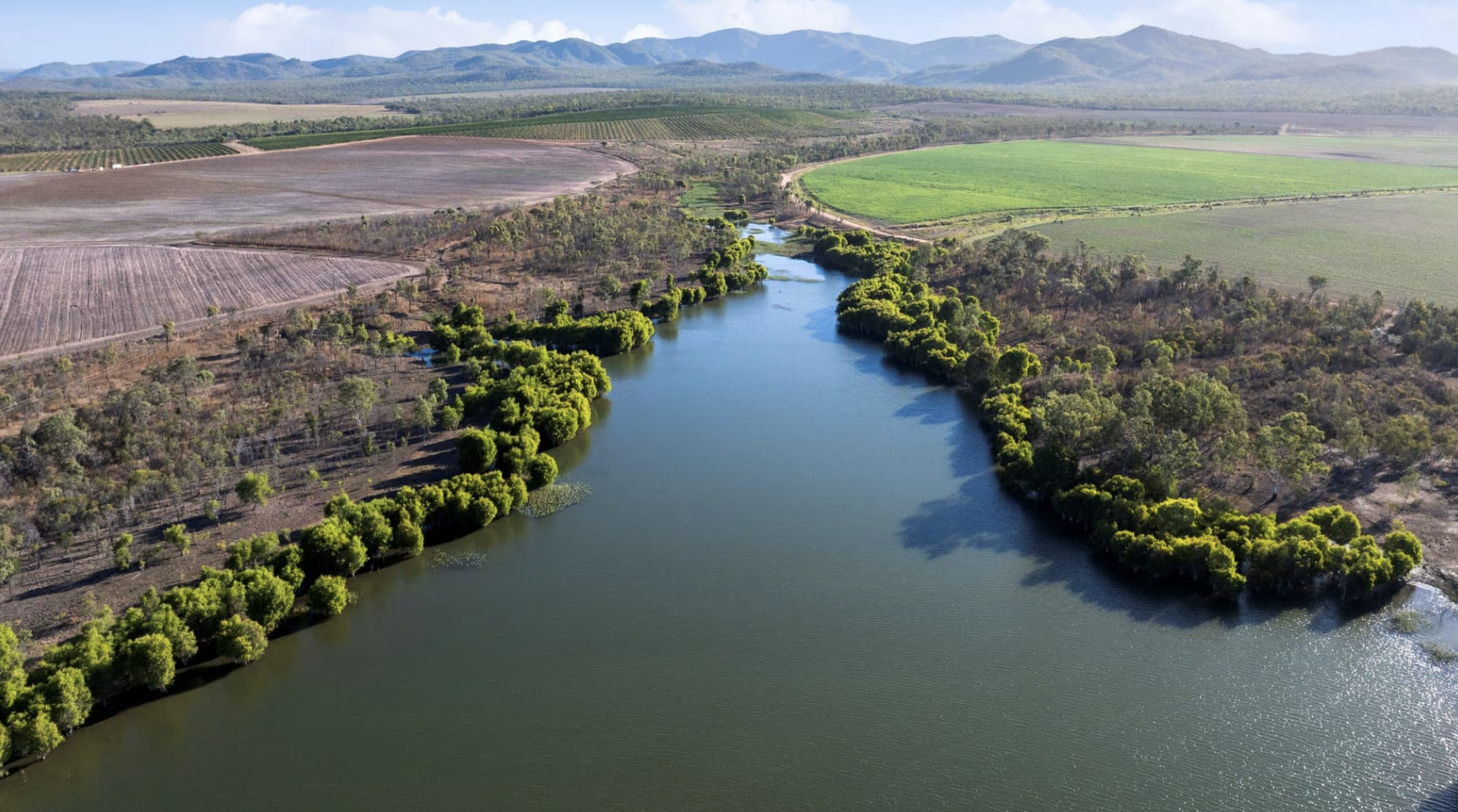
Bibbaringa could attract traditional producers seeking a breeding or finishing block, as well as families and off-farm investors. Pic: Supplied

Farmland’s next decade to reward execution over ownership
12:03

Check out this week's rural property report.

Farmland’s next decade to reward execution over ownership

Australian farmland’s next decade will favour skilled operators over passive owners as the market shifts away from easy, broad-based capital growth.

LAWD national directors Jaclyn Hope and Col Medway said in the agency’s September market analysis that future agricultural returns would increasingly be driven by business strategy, productivity, reliable earnings and disciplined investment rather than ownership alone.

“The era of easy, broad-based capital growth has given way to one in which operating performance matters alongside it,” they said.

“Efficiency is becoming more valuable than expansion for its own sake. Resilience is being engineered into production systems.

“Scale is emerging as a strategic advantage.

“And consolidation is likely to become a more prominent feature of the agricultural landscape.”

The shift follows three consecutive financial years of negative capital growth across institutional farmland.

The ANREV Australia Farmland Index recorded a 3.95 per cent total return for the 12 months to June 2026, with a 4.25 per cent income return offset by capital growth of -0.30 per cent.

Its capital index remains about 9 per cent below its June 2023 peak, reinforcing expectations that investors will need to rely more heavily on farm income and operational gains.

“Total returns in agriculture are the sum of operating return, productivity gains and capital appreciation,” Hope and Medway said.

“Over the past decade, capital appreciation did most of the work; over the next, the mix is likely to be more balanced.

“The previous decade rewarded participation. The next may reward execution.”

They said assets with secure water, strong productivity, operating scale, reliable earnings and clear strategic relevance would continue to attract competition and appreciate, while properties without those attributes could struggle regardless of broader market trends.

Livestock enterprises are well placed, with strong cattle and lamb prices and lower grain prices supporting margins, although seasonal uncertainty is making producers more selective about purchasing land.

Horticulture could also emerge as a stronger performer, particularly where premium assets combine secure water, effective management and attractive export exposure.

Consolidation is expected to accelerate as institutional investors, corporates and family businesses seek diversified operating platforms with greater scale, management capability and efficiency.

“The market is increasingly rewarding platforms rather than standalone assets,” the pair said.

Despite more subdued transaction volumes, Hope and Medway said investor conviction had not weakened, but the criteria used to assess opportunities had changed.

“Australian agriculture has entered a new chapter, defined less by rising land values alone and more by business strategy, operating performance and disciplined capital allocation,” they said.

“The market is not abandoning agriculture. It is becoming far more selective about where it places its capital.”

“The strongest businesses are rarely built during the easy years. They are built during periods of adjustment, when strategy matters most.”

Regenerative showpiece Bibbaringa listed with $11 million-plus hopes

Bibbaringa 2

Size: 950.7ha

Location: Bowna, NSW,

Sale method: EOI closing October 15

Price: $11 million to $12 million guide

A large-scale regenerative grazing property near Albury has been listed for sale with an $11 million to $12 million price guide after almost two decades of landscape development.

The 950.7ha Bibbaringa, at 1268 Wymah Road, Bowna, is being offered by Inglis Rural Property through expressions of interest closing on October 15.

Inglis Chief Executive Officer Sam Triggs said the vendor had transformed the holding since 2007 through regenerative management and Natural Sequence Farming principles.

“It presents in outstanding order,” Mr Triggs said.

“Gill (Sanbrook) has been a pioneer in the regenerative space and natural sequence farming, and she’s done a terrific job with the farm.

“She runs a rotational grazing system. She’s done a lot of work on fencing, tree lines, contour lines and reticulated water.”

More than 90 grazing paddocks support planned rotations and pasture recovery, while more than 70,000 native trees and shrubs have been established.

The operation has an estimated carrying capacity of 450 breeding cows and is presently running about 600 cattle under agistment, alongside some trade cattle.

Mr Triggs said the model gave the operator scope to respond quickly to seasonal conditions.

“If the season is getting tougher, she can wind the numbers back, and then if it’s a bigger season, she can wind the numbers up,” he said.

Water infrastructure includes a recently established bore, two 150,000L header tanks feeding about 44 troughs, spring-fed and catchment dams, two reservoir dams and solar-powered stock water monitoring.

“But she maintains 100 per cent groundcover,” Mr Triggs said.

“The soil health is outstanding. You can put a shovel in the ground anywhere and tip over the soil, and there’s beautiful, healthy soil.

“The organic matter built up in the soil all helps with water retention. It’s a bit of a unique one, really, because of their system of farming.”

Mr Triggs said Bibbaringa could attract traditional producers seeking a breeding or finishing block, as well as families and off-farm investors.

“It’s a low-input model in terms of a farming system because they do this rotational grazing with agistment cattle, so it doesn’t require a lot of labour the way they have run it,” he said.

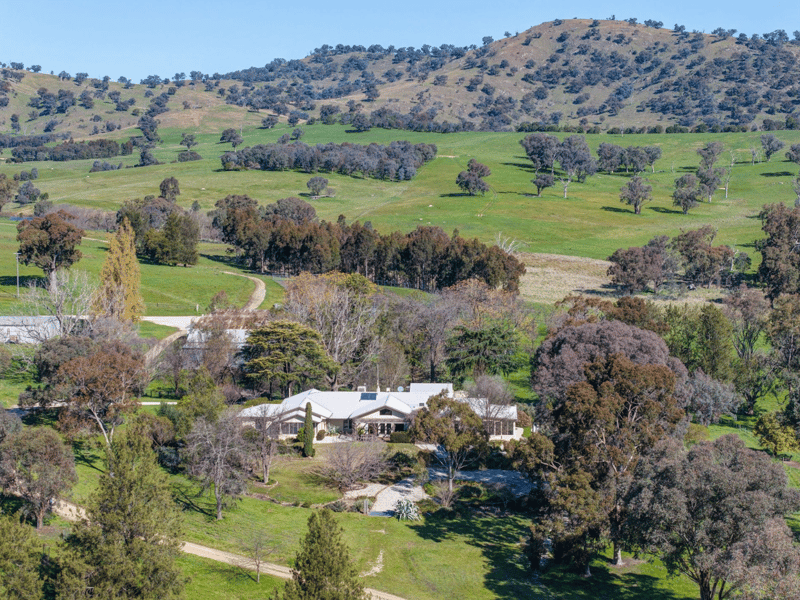
The four-bedroom, three-bathroom homestead was extensively renovated in 2008, while accommodation includes renovated four-bedroom shearers’ quarters and a one-bedroom woolshed studio.

Working infrastructure includes undercover Proway cattle yards, hay sheds, a workshop, silos, stables, a tack room and sheep facilities.

“Even the shearers’ quarters are more like a house, so they could put staff in there if they needed,” Mr Triggs said.

“It’s an overall package type property – good scale, close to Albury. It’s got a lot going for it.”

Mr Triggs said inquiries had come from local buyers, Melbourne, Sydney and elsewhere interstate, including producers seeking rainfall security.

Meldora secures $30 million Riverina aggregation

Birdwood

Size: 4837ha across eight properties

Location: Deniliquin, NSW

Price: About $30 million

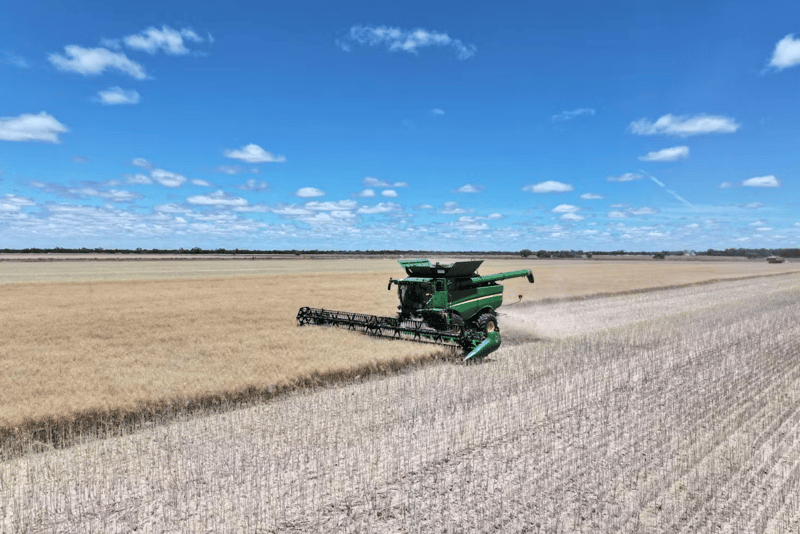
Gunn Agri Partners’ Meldora Land Management platform has acquired eight properties north of Deniliquin for about $30 million, creating a 4837ha farming and carbon project in the NSW Riverina.

The Pretty Pine Aggregation is the second major acquisition for the $250 million fund, launched in 2025 with backing from the Clean Energy Finance Corporation and Canadian pension fund La Caisse.

Rio Tinto is a foundation buyer of carbon credits generated by the platform.

Pretty Pine will combine irrigated and dryland cropping, livestock production and environmental plantings across two operational hubs, Birdwood and the Sutton Aggregation.

The Birdwood hub comprises the 1508ha Birdwood and adjoining 645ha Birdwood 2.

Birdwood, 12km north-west of Deniliquin, has 800ha of spray irrigation and 136ha of laser-levelled border-check country.

Its sale ends two decades of ownership by Melbourne IT entrepreneur Daniel Wallis, who invested in water efficiency, automation and soil health.

Birdwood 2 adds 362ha of irrigation development and 195ha of dryland cropping.

The second hub centres on the 2070ha Sutton Aggregation, bought from Mike Gatacre, and neighbouring 614ha Kalawar.

Sutton comprises five contiguous holdings about 37km north-west of Deniliquin, with 600ha of developed irrigation and infrastructure for cropping and livestock. Kalawar is a mixed farming property near Morago.

The purchase follows Meldora’s acquisition of Queensland’s Arcturus Downs Aggregation in September 2025.

DuFruits apple orchard returns to market with revised price guide

DuFruits 1

Size: 157.47ha (389.99 acres)

Location: Willigobung, NSW

Sale: EOI closing November 4 at 12pm

Price Guide: price guide $5.25 million to $5.5 million

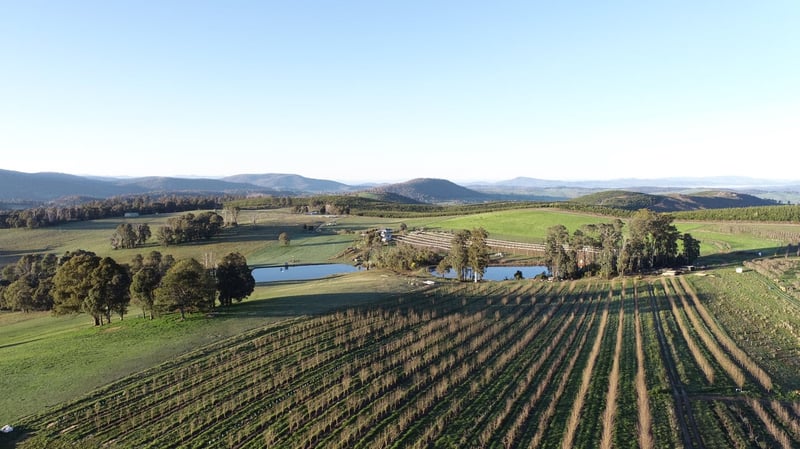
A vertically integrated apple orchard and livestock enterprise in southern NSW has returned to the market with revised price guidance after being held by the same family for 60 years.

DuFruits, in the renowned Batlow and Tumbarumba apple-growing region, is being offered by the Duffy family through Meares & Associates via expressions of interest, closing at 12pm on November 4.

The property was unsuccessfully offered in spring 2025 with $6.5 million guidance, but returns with expectations of $5.25 million to $5.5 million.

Meares & Associates principal Sam Meares said three generations had developed the operation.

“Returning to the market and priced to meet it, Dufruits represents an investment opportunity of significance,” he said.

“Three generations of the Duffy family have developed the farms, orchards and operating improvements initially and subsequently invested significant capital in new stock following the 2019 Batlow fires.

“The best years of the existing orchard are in the short-term future and will now be for the benefit of the new owners.”

DuFruits spans 157.47ha across the Orana and Blue Hills holdings, about 18km from Tumbarumba and 23km from Batlow.

Its orchard comprises about 30,400 irrigated apple trees, including Cosmic Crisp, Lady in Red and Alvina Gala varieties.

About 60 per cent of the orchard was replanted following the 2019 bushfires and is yet to reach full production, creating the prospect of increasing yields as the trees mature.

A further 30ha has been identified for potential development with more than 40,000 additional trees.

Water security is supported by four licensed spring-fed storage dams, 199ML of Tarcutta Creek water licences and average annual rainfall of 1081mm.

Infrastructure includes a 61m by 29m packing and storage shed, four cool rooms, fruit grading and packing equipment and a 75kW solar system.

The properties also support the Wanden White Suffolk stud, currently running about 230 ewes and progeny, 70 rams and 30 trade cattle.

“Being one of only two vertically integrated operations in the Batlow region, an area renowned for apple production but increasingly lifestyle appeal, the opportunities are endless,” Mr Meares said.

“Situated in the picturesque, rolling basalt hills with the snowy mountains as a backdrop, the available development land can be used to further increase production capacity, continue the livestock enterprise or expand into agritourism.”


Kylie Dulhunty is a journalist with more than 20 years experience covering everything from court to health. Today, Kylie loves nothing more than turning market trends, industry insights and epic property sales - residential, rural and commercial - into captivating stories.


High-tech Angus breeding operation hits the market

High-tech Angus breeding operation hits the market

Check out this week's rural property report. High-tech Angus breeding operation hits the market Size: 3,539ha Location: Barham, NSW Sale method:...

Read More >
Century-old Central Queensland cattle enterprise hits the market

Century-old Central Queensland cattle enterprise hits the market

Check out this week's rural property report: Century-old Central Queensland cattle enterprise hits the market, Benmara Station sells for $26...

Read More >