
3 min read

Get water monitoring sorted before summer: Farmbot

Get water monitoring sorted before summer: Farmbot
Ian Clifton, with Max Kelly from Farmbot, working on better solutions for water monitoring. Pic: Supplied 
Get water monitoring sorted before summer: Farmbot
4:48

With summer approaching, it's the perfect time to get remote water monitoring in place, before stock and infrastructure come under pressure.
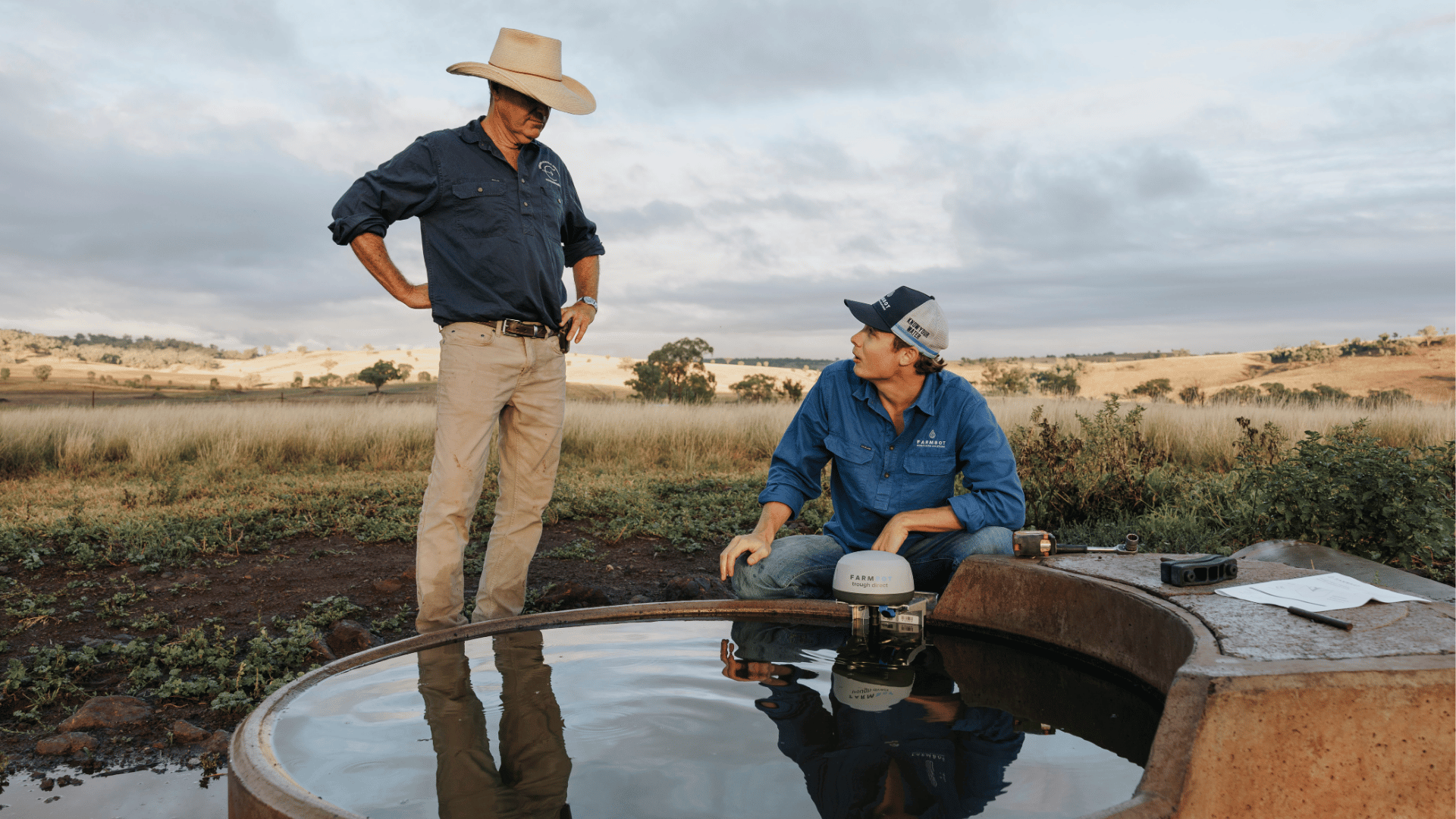
For most livestock producers, checking water is a job that never ends. Tanks, troughs, bores and pumps all need eyes on them, and in the heat of summer, a problem missed between water runs can quickly cost stock condition, or worse.

Farmbot General Manager Tess O'Hagan said a manual check only told producers what was happening while they were there.

“When you leave that tank or that watering point, you actually don't know what's happening,” Miss O'Hagan said.

“Chances are something can go wrong 10 minutes after you've left or a day after you've left, and you're not due back there for another two or three days.”

Checking less, responding faster

Farmbot sends water data over satellite or cellular networks to a phone or desktop, giving producers 24/7 visibility of their water points and alerting them when something changes.

“We can let you know within minutes,” Miss O'Hagan said.

“Time is of the essence, and obviously especially when it's extremely hot, any livestock without water for a period of time puts them under stress.”

She said some producers assumed remote monitoring wasn't worth it because they would still be driving out to check other things.

“A lot of people are like, ‘Oh yeah, I check my waters two or three times a week,’ but they only do that because that's all the time they can probably assign to that job, because there's so many other jobs to do on the property every day,” she said.

Rather than replacing paddock visits altogether, the system means those trips are made when they are needed.

“What we're empowering people to do is use their time more wisely and only actually go out to manage their water when they actually have to.”

Catching slow leaks before they become blowouts

Beyond real-time alerts, the trend data is picking up problems routine checks can miss. Miss O'Hagan said new customers regularly spotted slow leaks by looking at the water level graphs for their tanks.

“A lot of our customers, especially new customers that come on board, their feedback to us four, six weeks in, it's ‘I wish I did this sooner’,” she said.

“It's not just about knowing your water level at a point in time. It's that full visibility and insight, and it's all actionable data.”

Finding a slow leak early saves water and protects infrastructure, fixing a small fault before it turns into a major repair job in the middle of summer.

More than a tank gauge

Farmbot has been in the market for more than 10 years and now works with about 5,000 operations across Australia.

“We started out as sort of a simple water level monitoring solution, so it did one thing. It monitored the water in the tank,” Miss O'Hagan said.

Customer feedback has driven the system's development since. Farmbot now offers about 15 different sensors, covering rain gauges, flow meters, pressure sensors, trough monitoring and bore monitoring, so producers can see what is happening in their pipes as well as their tanks. A single Monitor unit connects up to 16 sensors and is solar powered.

They have also added pump control, allowing producers to remotely start and stop pumps and automate them off the level of the tank or dam they are pumping to.

“We're all about trying to eliminate that need to get in the car and not know what you're actually driving up to," Miss O'Hagan said,

At paddock level, Farmbot's Trough Direct connects directly to satellite and sends an alert the moment a water issue occurs, so stock are not left waiting between checks.

Why now?

Miss O'Hagan said the weeks before summer were the time to get monitoring in place, rather than waiting until water systems were already stretched.

“Once you're in there, that's when your water infrastructure is often under the most pressure,” she said.

“And so getting the monitoring on it now sets you up for success.”

Setting up does not involve long lead times or a technician visit.

“All of our products are designed to be shipped via Australia Post and self-installable by anyone on the farm,” she said.

“So a monitor might take less than 10 minutes to install and turn on.”

She said the relationship with customers continued well past installation.

“We're not here to just sort of sell a product and say off you go,” Miss O'Hagan said.

“We like to think that once you adopt this technology, that our relationship is just beginning, and that we want to be there side by side with them for the long haul.”

Visit farmbot.com.au to learn more or complete the enquiry form.

Get water monitoring sorted before summer: Farmbot

Get water monitoring sorted before summer: Farmbot

With summer approaching, it's the perfect time to get remote water monitoring in place, before stock and infrastructure come under pressure.
Read More >
CERES TAG devices find cow and calf in a bushfire's path on a 60,000-acre Queensland station

CERES TAG devices find cow and calf in a bushfire's path on a 60,000-acre Queensland station

When fire jumped the boundary at Attica Station two years ago, station manager Brandon Hood-Smith reached for his phone to check on the cattle.
Read More >
Why trusted advisors matter for farm business growth: Trent Bridge Wagyu's experience

Why trusted advisors matter for farm business growth: Trent Bridge Wagyu's experience

Having a good team of trusted advisors to call on is essential for a modern farm business, according to Charlie Perry, principal of Trent Bridge...

Read More >