2 min read

Pathways to zero: What’s working on farm right now

Pathways to zero: What’s working on farm right now
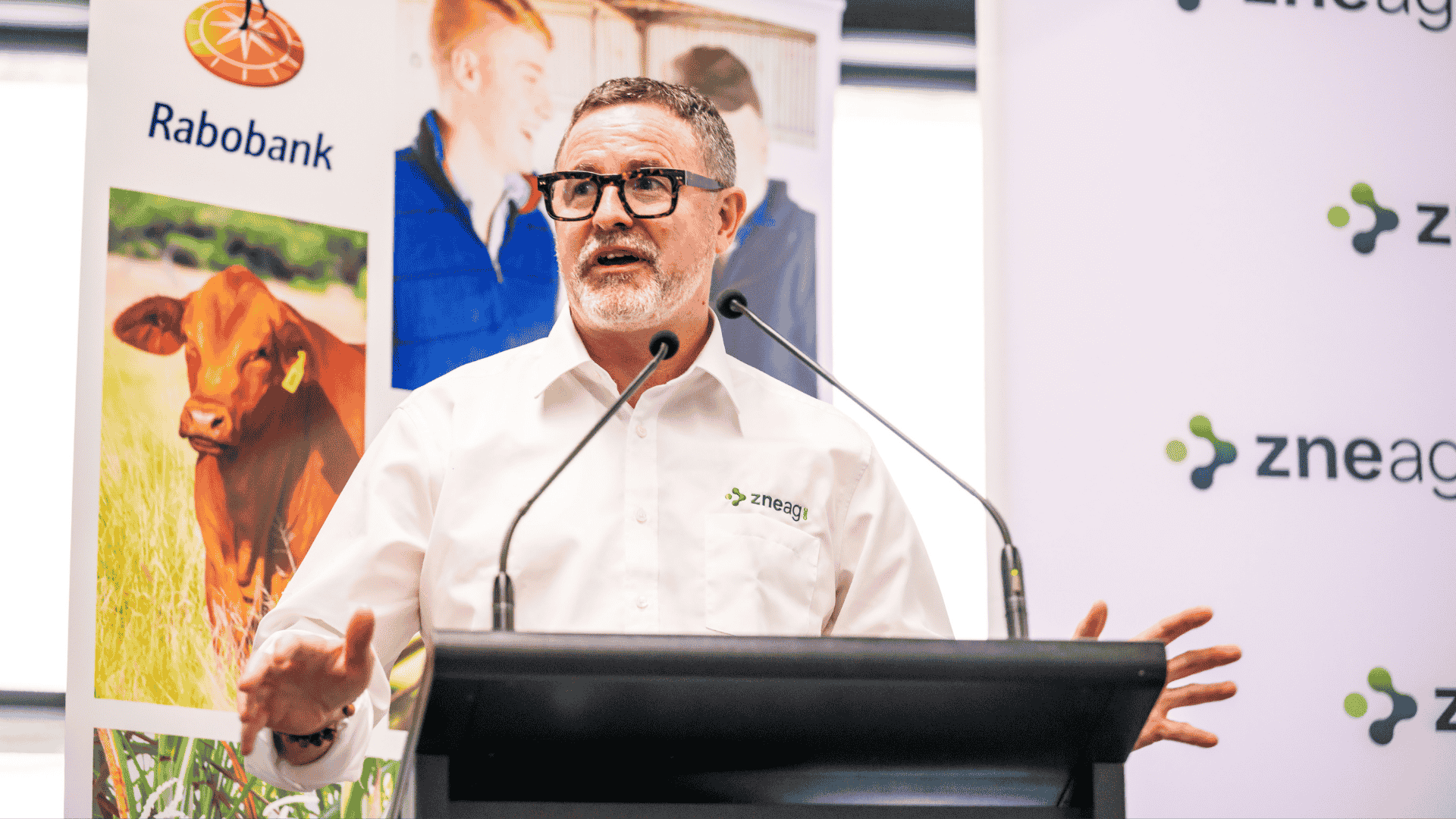
ZNE-Ag CRC Chief Executive Officer Richard Heath presenting in Brisbane last week. 
Pathways to zero: What’s working on farm right now
4:13

The Zero Net Emissions Agriculture Cooperative Research Centre's Pathways to Zero Net Emissions annual conference in Brisbane brought together researchers, producers and industry leaders to take stock. Speakers focused on practical progress, the latest science and what’s working on farm right now. For producers looking to make sense of a fast-moving space, three messages stood out.

Aussie farmers are largely not motivated by climate change, but are doing the work anyway

ABARES Executive Director Dr Jared Greenville shared new research showing that only 7% of Australian broadacre and dairy farmers know their greenhouse gas emissions number. That small group accounts for about 17% of total production, mostly made up of larger cattle operations.

The research also explored why participation remains low.

“Many of the farmers believe the governments were targeting the agriculture sector over other heavily polluting sectors. They also expressed concerns over the lack of credible information about carbon schemes, along with the significant red tape costs of being involved,” Dr Greenville said.

Despite this hesitancy, the survey found farmers are far from inactive. They are steadily adopting sustainability practices that lift efficiency and productivity. This includes 57% using soil tests in the past three years and 82% of dairy farms using cell strip or rotational grazing.

Dr Greenville said motivations for these activities varied, noting that minimising the impact of climate change ranked lowest.

Farmers around the world face similar challenges

Nuffield Scholar Pippa Jones shared insights from visiting 12 countries over 15 weeks. She noted Australia is a world leader in many areas.

“Australia's ACCU scheme is really unique. I didn't come close to finding anything as thorough as Australia's ACCU scheme, with as much science behind it, and farmers can also be measuring, monitoring and managing their carbon.”

She highlighted international differences in farmer engagement. “We talked about that 7% of farmers in Australia know they met their emission number already. So in Scotland it’s 75% … In Scotland, they have a subsidy system called the basic payment scheme. In order to access the basic payment scheme, at the moment, you need to do five different activities. One of those is your carbon audit.”

In Canada, she observed strong incentives: “The Canadian government invested $704 million incentivising farmers to engage through cover cropping, rotational grazing and management of nitrogen emissions farmers [could] obtain up to 85% of the fees of that project implementation. So that's how they got farmers in the room.”

Ms Jones also stressed the importance of communication. “I'm always also always asking people who work with farmers, meet farmers where they're at, and never make assumptions that you know their level of knowledge."

She said there were knowledge gaps at farmer, advisor, science and policy levels.

“In Australia, we are really lucky to have the CRC, because I feel like that is a really valuable way to fill those knowledge gaps, with really scientific evidence based credible information,” she said.

Research made farm-ready

The national launch of Pathways to Zero Net Emissions Agriculture – A Stocktake of emissions reduction technologies  marked a fresh reference point for sector-wide progress.

Research Director for the Zero Net Emissions Agriculture CRC Professor Ben Hayes released the booklet on behalf of the CRC’s 76 partners.

“it's a stock take of emissions reduction technologies, and the focus is really on emissions reduction practices and technologies that are available right now for producers and farmers to implement,” Professor Hayes said.

The booklet breaks down definitions, explainers and case studies, with information grouped by sector, including livestock, so producers can quickly find what applies to their own operation.

It will be updated every year, keeping producers across the latest research and practical opportunities.

Pathways to zero: What’s working on farm right now

Pathways to zero: What’s working on farm right now

The Zero Net Emissions Agriculture Cooperative Research Centre's Pathways to Zero Net Emissions annual conference in Brisbane brought together...

Read More >
Nbryo unveils world-first embryo multiplication technology for Australian cattle producers

Nbryo unveils world-first embryo multiplication technology for Australian cattle producers

Nbryo has released a new embryo multiplication technology, saying that genetic gain via assisted bovine reproduction is now easier and more cost...

Read More >
Methane-busting pastures in focus at conference

Methane-busting pastures in focus at conference

As the livestock sector accelerates efforts to reduce emissions, Zero Net Emissions Agriculture CRC is spotlighting one of the most practical and...

Read More >