
How much weight do livestock lose on the truck? Gut shrink and delivery adjustment explained
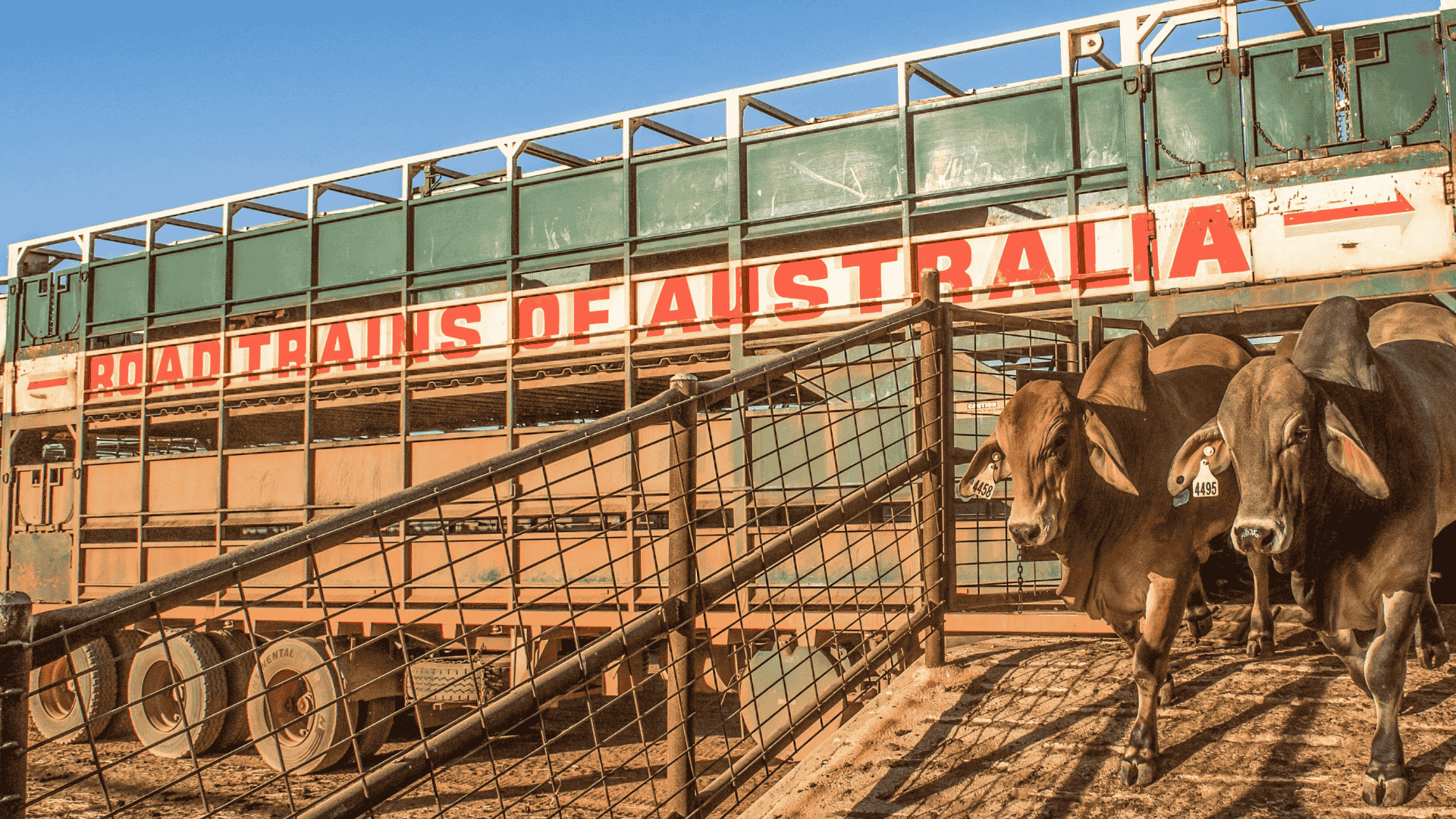
Livestock lose weight every hour they spend off feed and water, and much of it comes off early. Under the AuctionsPlus User Agreement, a 400kg steer...
Livestock lose weight every hour they spend off feed and water, and much of it comes off early. Under the AuctionsPlus User Agreement, a 400kg steer off feed for 12 hours is calculated to lose about 7%, or 28kg, and a 500kg cow about 8%, or 40kg. Sheep lose weight more slowly but over a longer window, with a 50kg lamb losing about 4.8% after 12 hours and 10.8% after 48 hours. Most of the early loss is gut fill, which stock regain quickly once they're back on feed and water.
Because stock bought on AuctionsPlus often travel long distances between regions and states, knowing how gut shrink works matters for both sides of the sale. It's important to understand how buyers and sellers can set realistic expectations on gut shrink and delivery adjustment before the hammer falls, not after the truck pulls up.
AuctionsPlus assessments give buyers a clear picture of the stock on offer, including an assessed weight. The delivery adjustment converts that assessed weight into an expected delivered weight by allowing for typical loss under standard conditions.
This gives every listing a fair, consistent starting point. It is still a standardised estimate though, and no single figure can account for every truck, route, season, or mob.
Gut shrink is calculated using set rates of liveweight loss for each hour off feed. The rates differ between cattle and sheep and goats, and between classes of cattle.
Several other factors can push losses higher:
Weather. Adverse weather such as hot, humid, cold, wet and windy conditions all increase loss
The journey itself. Rough roads, long waits at yards or spelling points, and stocking density can all add stress and extra weight loss.
Feed type. The type of feed stock graze before delivery can affect their gut fill and how much weight they lose in transit. For example, lush green pasture has a much higher water content than dry hay, so stock coming off green feed are likely to carry more gut fill and shrink more as a result.
For cattle, cows and non-yearling heifers are calculated at 1% per hour for the first four hours off feed, then 0.5% per hour from hours five to 12. All other cattle categories, including steers, lose 0.75% per hour for the first four hours, then 0.5% per hour through to hour 12.
Take a 400kg steer that has been off feed for 12 hours. It may lose 3% in the first four hours and a further 4% over the next eight, a total of 7%. That is about 28kg, so the steer weighs roughly 372kg. A cow in the same situation may loses 8%.
|
Time off feed |
Cows & heifers (non-yearlings): hourly rate |
Cumulative loss |
Example: 500kg cow |
Other categories (e.g., steers): hourly rate |
Cumulative loss |
Example: 400kg steer |
|
2 hours |
1.0% |
2.0% |
490kg |
0.75% |
1.5% |
394kg |
|
4 hours |
1.0% |
4.0% |
480kg |
0.75% |
3.0% |
388kg |
|
6 hours |
0.50% |
5.0% |
475kg |
0.50% |
4.0% |
384kg |
|
8 hours |
0.50% |
6.0% |
470kg |
0.50% |
5.0% |
380kg |
|
12 hours |
0.50% |
8.0% |
460kg |
0.50% |
7.0% |
372kg |
Table 1: Calculation of Gut Shrink for Cattle, AuctionsPlus User Agreement 2026
After 12 hours off feed, a 500kg cow may have lost about 40kg and a 400kg steer about 28 kg. Half or more of that loss happens in the first four hours, as animals empty out gut contents. However, they do continue to lose weight even after their stomachs are empty. Any time beyond our specified 12 hours isn't covered by the calculation.
The rate is spread over a much longer window and slows as time goes on:
|
Time off feed |
Hourly rate for that period |
Cumulative loss |
Example: 50kg lamb |
|
3 hours |
0.50% |
1.5% |
49.3kg |
|
6 hours |
0.50% |
3.0% |
48.5kg |
|
12 hours |
0.30% |
4.8% |
47.6kg |
|
24 hours |
0.25% |
7.8% |
46.1kg |
|
48 hours |
0.125% |
10.8% |
44.6kg |
Table 2: Calculation of Gut Shrink for Sheep, AuctionsPlus User Agreement 2026
These figures show two things that matter for long-haul consignments.
Similar to cattle, most of the early loss happens fast. In those first hours, animals are emptying out effluent, which is gut fill loss. It is significant on the scales but is able to be recovered quickly once stock are back on feed and water. A ewe off feed for 48 hours could have lost more than 10% of its liveweight.
Whilst stock can be trucked for prolonged periods of time, it is important that all parties including truck drivers adhere to the spelling of livestock at periods of time. Further information on the travel time for livestock before they need to be rested can be found at Australian Animal Welfare Standards and Guidelines for Land Transport of Livestock.
Be accurate and detailed in the listing. Buyers bid with more confidence when they know what the stock have been eating, how they are watered and what curfew arrangements are planned. Listing whether cattle are on green pasture, dry feed or grain matters because feed type shapes gut fill. It has been researched (Liveweight loss and recovery in cattle, Future Beef, 2026) that cattle that graze on pasture, or are fed forage, have a greater weight of gut fill compared with cattle on a grain diet. Stock coming off green feed therefore carry more weight they can lose. This is where an Assessor should consider if the full less 5% industry standard delivery adjustment is appropriate, or if it should be more.
Transition stock onto good quality roughage. MLA's guidelines recommend yarding stock before the journey on good quality dry hay and clean water. Moving stock off lush pasture onto hay or straw steadies the rumen, reduces the gut fill the animals carry onto the truck, and generally leads to a cleaner, calmer trip.
Keep the lead-up quiet. Stress speeds up weight loss. Do tagging, scanning and other yard work well ahead of time, and avoid jobs like drenching, crutching or dehorning in the days before loading. On loading day, stock should be settled in the yards, not run in from the paddock as the truck backs up.
Plan timing with the carrier. Talk through the journey before the truck turns up, including trip length, road conditions, likely spelling stops and the weather forecast. Avoid loading in the heat of the day where possible.
Factor in the whole journey, not just the distance. For interstate or remote deliveries, estimate the total time the stock will be without feed and water. That includes time in the yards before loading, time on the truck and any spelling stops.
Have the arrival ready. Water, good quality hay and a quiet, well-set-up paddock or yard should be ready before the truck arrives. Gut fill comes back quickly once stock are eating and drinking again.
Judge the result on recovery, not just the first weigh. A weigh straight off the truck shows what the animals have lost, but not what they will gain back. Weighing again after stock have settled and recovered gives a fairer picture of how they travelled and how they will perform. Under AuctionsPlus terms, a weight dispute requires that stock first undergo a seven-day rest period on equivalent feed to the Assessment with an adequate water supply. This allows the stock to settle and recover weight lost through gut shrink before any reweigh is conducted.
The delivery adjustment applied to AuctionsPlus assessments is a fair, consistent benchmark, but it is a standard allowance and cannot account for every truck, route, season or mob.
The gut shrink figures show that loss builds up the longer stock are without feed and water, and that on longer journeys a growing share of it is tissue rather than gut fill.
The biggest factor that sellers and buyers can control is the total time stock spend without feed and water. Sellers can reduce it with good preparation, accurate listings and well-timed loading. Buyers can account for it with realistic bids, thorough reviews of the listings, and a well-prepared arrival.

Livestock lose weight every hour they spend off feed and water, and much of it comes off early. Under the AuctionsPlus User Agreement, a 400kg steer...
 Alex McLaughlin: Jul 29, 2026
A new integration between AuctionsPlus, the Australian Wagyu Association and Helical delivers live, filterable Wagyu Breeding Values in online stud...
 Natasha Lobban: Jul 21, 2026
AuctionsPlus has partnered with Angus Australia to integrate Estimated Breeding Values (EBVs) directly into Angus stud sale catalogues on the...