

2 min read

Brazil beefs up exports but US still looking for more

Brazil beefs up exports but US still looking for more
Pic: AgriShots
Brazil beefs up exports but US still looking for more
4:21

Quotas and subsequent tariffs continue to play a significant role in the global beef trade as we close in on the new calendar year orders kicking in. Australia remains well placed with strong supply, recording the second highest September beef export volume on record last month, despite plenty of trade barriers being put in place in the second half of the year and subsequent increased competition. Australia’s year-to-date beef exports are currently sitting about 7% higher year-on-year, which accurately reflects Meat & Livestock Australia’s forecast increase in 2026 from the previous year. This coming to fruition will depend somewhat on the seasonal impact on supply going forward, and how much beef Brazil has left in the bank.

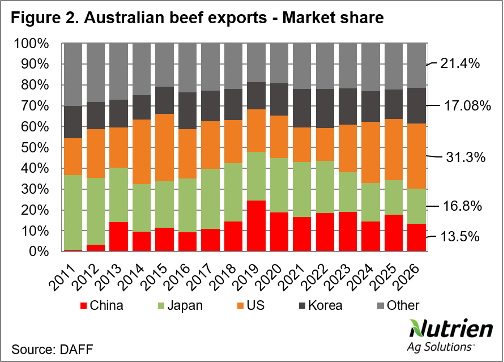
Australian beef exports in September were above 132,000 tonnes shipped weight, about 5% lower year-on-year, but 32% above the five-year average for the month. It brought year-to-date beef volumes above last year’s record-breaking figure. The US remained the biggest market, with about 30% of the share, but increased competition from South America meant they took their lowest monthly volume of Australian beef since March. Trade with China was still stalled due to the safeguard tariff. Putting it into some perspective, September volumes to China were 53% lower than the five-year average and 167% lower year-on-year. Japan was the only major market which increased its intake of Australian beef in September, and we actually have to go back to 2019 to find any higher monthly total.

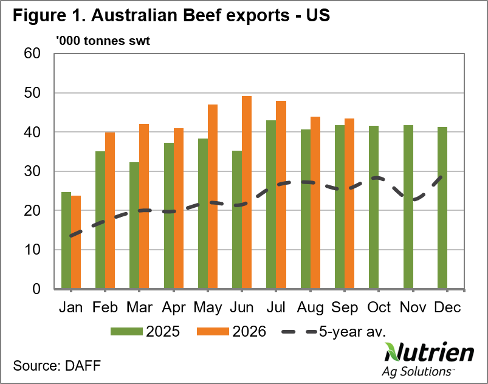
The US has imported 18.7% more beef for the year-to-date due to their current low production, with Australia being the biggest supplier, but Argentina and Brazil are seeing much bigger year-on-year increases in their exports to the US. Brazil’s competitiveness into the US market was buoyed when Trump’s ‘Affordable Beef Quota’ gave them a tariff break for 90 days starting September, which also coincided with Brazil filling their safeguard quota into China, essentially closing that market to them for the remainder of the year. It has had somewhat of the intended impact, pulling both US domestic and imported grinding beef prices lower – double the rate that domestic prices usually drop at this time of year.

Brazil’s beef export capability is going from strength to strength, and the temporary quota relief it has been given into the US has definitely upped the ante in terms of competition. That said, it hasn’t gone close to filling the extra quota provided and has yet to significantly diminish Australian volumes into the US. And this is despite Brazilian beef trading at a significant discount. It appears that US demand is still outstripping supply.

What does it mean?

Brazil’s attention will no doubt return to China at the start of the new year - or whenever the US reintroduces the usual tariffs - but they are restricted from entering that market by the safeguard quota, similar to Australia. However, continued strong overall volumes out of Australia despite China being stalled for the past four months indicates there is plenty of room for both in that market too - for now.


The Bottom Line

  • Australian beef exports were down year-on-year in September, but still tracking 7% higher than 2025 for the year-to-date.

  • US still taking the largest market share, with YTD imports of Australian beef up 13% on last year’s record volume.

  • Brazilian competition in the US is pulling prices down but has yet to impact Australian volumes.


Jamie-Lee Oldfield is a seasoned agri-media, communications professional and livestock market analyst who lives and works on a family-owned stud and commercial beef and sheep operation in Coolac, NSW.