
2 min read

Short weeks don’t stop market surge

Short weeks don’t stop market surge
Pic: AgriShots
Short weeks don’t stop market surge
3:08

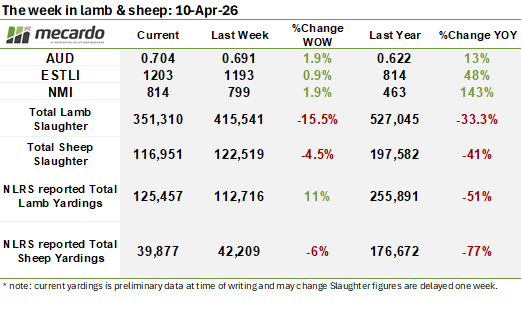
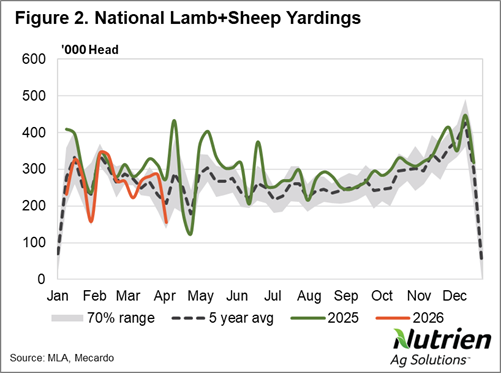
Two short weeks didn’t slow the sheep and lamb market, with national indicators in the green right across the board, and restocker lambs now above $12/kg for the first time. Total combined yardings lifted week-on-week but were still at public holiday impacted levels comparative to the rest of this year, with Easter trading the only time in the previous two years that yardings have dropped as low.

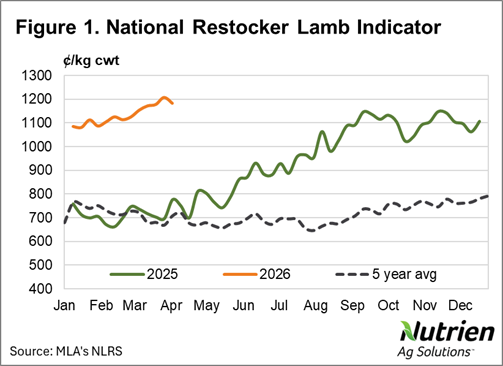
National restocker lamb throughput jumped considerably this week, up by 7000, but at about 26,000 head was still 10,000 head or more lower than the number recorded weekly throughout March. Of those, 23% came out of Wagga Wagga, NSW, which averaged 1235¢/kg compared to the national indicator price of 1211¢/kg. That was a record high price for the indicator, putting it 35% stronger than 12 months ago and 68% above the five-year average. It has climbed 40¢/kg in the past month alone.

Trade lambs were on the lower end of the increase this week, up by about 12¢/kg to 1199¢/kg, but also had the highest throughput jump, with nearly 15,000 more eligible lambs traded nationally. The Eastern States Trade Lamb Indicator broke through the $12/kg mark also this week, albeit not for the first time ever but for the first time this year, peaking at 1216¢/kg on Tuesday. Merino and light lambs made the biggest moves, up 29¢/kg and 54¢/kg respectively.

Of the total 165,000 head of sheep and lambs yarded this week, mutton made up less than 40,000 head, and just over half of those were eligible for the national indicator, which picked up 15c/kg for the week to land at 814¢/kg. Again, it was the lowest sheep yarding since last Easter, and the year-to-date weekly sheep yarding average is now sitting 22% lower year-on-year. The mutton price is now 70% above the five-year figure.

Despite unrest in the Middle East and the flow-on impacts globally, lamb exports for March remained resilient, firm on the previous month which is as strong as they’ve been since June last year. Lamb volumes to the three top markets increased year-on-year, and significantly so, up between 15% and 31%, while when it comes to mutton we have to go back to 2022 to find a month with a lower export volume.

The week ahead…

Supply next week will be very interesting. Now that we are in April, more rain across the southern sheep producing areas over the past couple of weeks has the potential to further shore up the season and could encourage retention. Sheep throughput, mutton export volumes and the recently revised flock numbers all point to the sheep supply getting tighter and tighter.


Jamie-Lee Oldfield is a seasoned agri-media, communications professional and livestock market analyst who lives and works on a family-owned stud and commercial beef and sheep operation in Coolac, NSW.


Short weeks don’t stop market surge

Short weeks don’t stop market surge

Two short weeks didn’t slow the sheep and lamb market, with national indicators in the green right across the board, and restocker lambs now above...
Read More >
Market confidence rears its ugly head despite red hot beef exports

Market confidence rears its ugly head despite red hot beef exports

Last week, the Department of Agriculture, Forestry & Fisheries (DAFF) released the March 2026 monthly beef export figures. For the month, exports hit...

Read More >
Angus leads, but Black Baldys and Shorthorns steal the spotlight in NSW starting nine

Angus leads, but Black Baldys and Shorthorns steal the spotlight in NSW starting nine

New South Wales has set the benchmark for throughput on AuctionsPlus, offering nearly 243,000 head across 6,450 lots, with an overall clearance of...

Read More >