
Did US trade policy move cattle prices? The data says no
 Steven Jaffery: Oct 21, 2026
Last week we looked at restoration of restocker demand in cattle markets, which, along with tightening supply, has driven the young cattle market to a four-year high. This week we take a look at buy prices and run some scenarios over the trading margins.
There are some pretty bullish price forecasts bouncing around at the moment. Strong price forecasts are based on a shrinking herd and extreme export beef prices. A pretty good season would be required as well.
There is also commentary coming from the opposite angle, urging caution, with the Chinese and South Korean quota issues possibly impacting demand. Of course, there is also that weather phenomenon called El Nino lurking, possibly striking in late winter spring.

The market is currently siding with the bulls, the EYCI nudging the 1000¢/kg cwt level late last week. Figure 1 shows the EYCI at 999¢/kg cwt last Friday, not a record but a very high price. Interestingly the first time the EYCI breached 1000¢ was in July 2021, after which it continued rising until peaking in late January 2022 at 1190¢/cwt.
For those expecting a repeat there are some differences. The national herd was 2 million head, or 7% smaller in 2021, and we were in the middle of a three year La Nina.

The current price rally appears more like the winter price rallies of old, before easing in spring as supply improves.
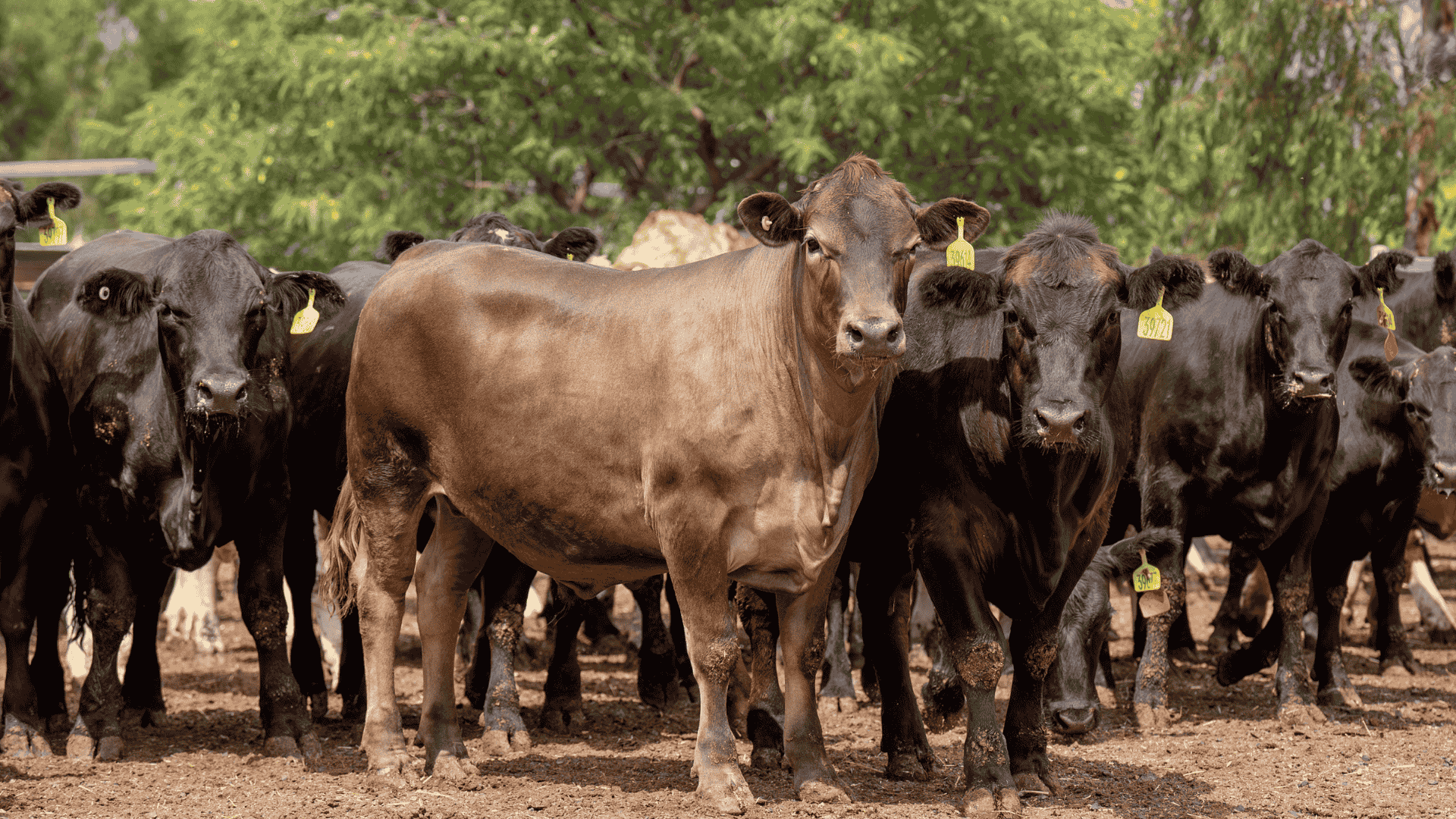
As usual cattle buy prices vary widely, but most Angus Steers around 300kgs are making 600-650¢/kg lwt. We used 610¢, which gives a dollar per head value of $1,830.
The potential spread sell price scenarios are currently extreme. Firstly, the middle scenario, with feeders at around the current prices of 5.30/kg lwt. This would return over $500, a 30% margin before costs.
The bullish view has feeders at 650¢/lwt next year, returning a very healthy $1095/hd at 60% gross margin. This feeder price would put quite the squeeze on lot feeders, who would need a finished cattle price north of 1000¢/kg cwt to get out of $2,925 feeder steers.
The bearish view is the one where El Nino hits. The herd is sold down and overwhelms processing capacity. Grain prices move above $400/t and young cattle prices tank. A feeder price of 400¢/kg cwt brings negative returns, and it could be worse than that. It was only 18 months ago when feeder cattle prices were around 350¢.
Note that this trade calculation does not include feed, freight, treatments, or administrative costs. These will differ between enterprises and should be assessed individually when considering any trade.
What does this mean?
Last week we looked at restoration of restocker demand in cattle markets, which, along with tightening supply, has driven the young cattle market to a four-year high. This week we take a look at buy prices and run some scenarios over the trading margins.
Young cattle prices continue to rise, with restocker cattle in expensive territory now.
Price outlooks vary widely, with much depending on spring and summer rainfall.
There is significant downside risk, but also upside potential.
 Angus Brown brings over 20 years of expertise analysing Australian agricultural markets, and also runs a mixed farming operation in Hamilton, Victoria.

 Matt Dalgleish: Oct 20, 2026
There is a growing perception that Australian cattle prices are becoming increasingly volatile, with larger price swings becoming a more prominent...
 Ripley Atkinson