
1 min read

What role does red meat play in Australia’s economy?

What role does red meat play in Australia’s economy?
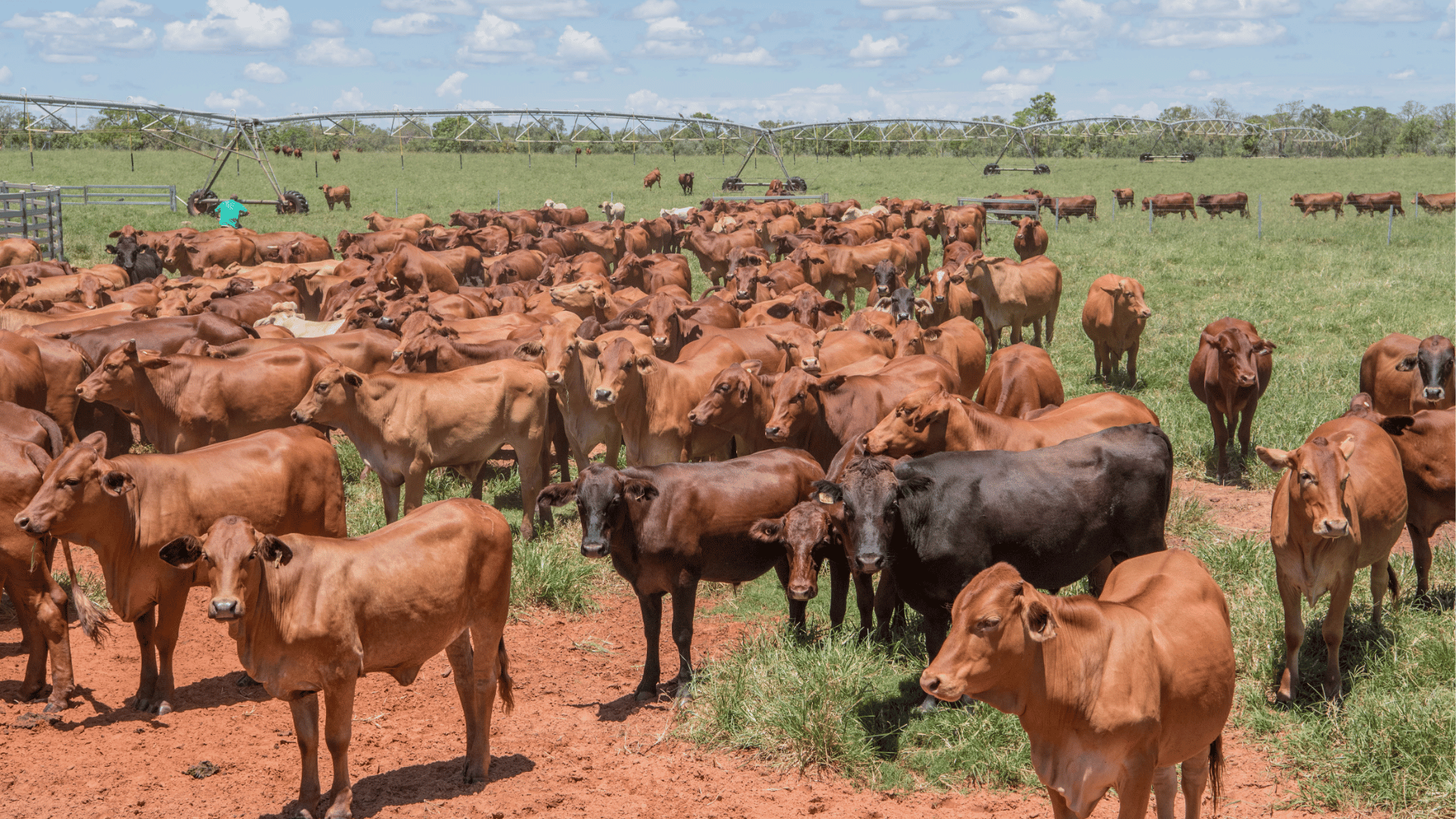
In the 2024 financial year the sector experienced notable shifts in market fundamentals, with significant market easing, supply lifting to record volumes, a market recovery and the return of industry confidence. Pic: AgriShots

Last week, Meat & Livestock Australia (MLA) released the 2025 State of the Industry Report (SOTI), providing a comprehensive snapshot of the red meat and livestock industry in 2024 and its contribution to the broader economy. In the 2024 financial year the sector experienced notable shifts in market fundamentals, with significant market easing, supply lifting to record volumes, a market recovery and the return of industry confidence.

Economic impact of the red meat sector

The report highlights that Australia’s red meat and livestock industry generated $77.1 billion in turnover in 2023–24, supporting more than 460,000 jobs nationally. While total turnover eased 10.3% year-on-year (YoY) due to price contractions and elevated supply, the processing sector remained resilient, with turnover rising 5.4%.

Production (beef cattle, sheep, and feedlots) accounted for 45.8% of turnover, followed by processing at 35.4% and wholesale/retail at 18.8%. Value add – representing the industry’s contribution to gross domestic product (GDP) – was $14.3 billion, declining 43.3% from 2022–23. This reflects a contraction in the domestic livestock market despite an early 2024 price recovery.

Exports and market contribution

Red meat exports – supported by strong global demand – increased 3.2% to $19.5 billion. Beef exports (+24%) reached 1.34 million tonnes shipped weight (swt), while lamb (+10%), mutton (21.6%), and goatmeat (+51.9%) exports also grew. Live exports played a critical role in regional economies, with 766,044 cattle exported (up 13%) and 433,078 sheep (down 33%). There was a notable shift with Jordan becoming the largest destination for live sheep shipments.

Employment and regional impact

The sector directly employed 197,512 people and supported a further 264,760 jobs in servicing businesses, reinforcing its role in sustaining regional economies and associated supply chains.

Outlook

Continued investment in market access, innovation, and sustainability is expected to maintain and expand the sector’s economic contribution, ensuring Australian red meat remains a vital source of value for producers, regional communities, and the national economy.


The Bottom Line

  • The Australian red meat industry turned over $77.1 billion in 2023–24.
  • The industry contributed $14.3 billion to Australia’s gross domestic product.
  • The industry employed more than 460,000 people.

Australia ag commodity prices and the Australian dollar

Australia ag commodity prices and the Australian dollar

The higher Australian dollar has prompted questions about the likely impact on local extensive agricultural commodity prices. Mecardo has covered...

Read More >
Cattle cycle highs, liquidation and global competition

Cattle cycle highs, liquidation and global competition

Last week, StoneX released its H1 2026 Australian Cattle & Beef Market Outlook report, which covers all key production forecasts for the beef...

Read More >
Broad merino price, volume and price ratio

Broad merino price, volume and price ratio

Greasy wool prices have increased markedly this season, in the absence of any substantial improvement in macroeconomic indicators or major apparel...

Read More >