
A somewhat educated guesstimate
Each December we save the last article of the year for a bit of a crystal ball gaze, as we try to bring together market fundamentals and work out...
Each December we save the last article of the year for a bit of a crystal ball gaze, as we try to bring together market fundamentals and work out where prices are going in the New Year.
Forecasting lamb supply should be easy. The total number of ewes, times marking percentage, minus those retained as breeders, equals supply for the season, which runs from July to June. Unfortunately, we have to deal with a number of unknowns.
We haven’t had an official flock number for three years, and survey numbers for breeding ewes and lambs marked seem to be defying anecdotal evidence.

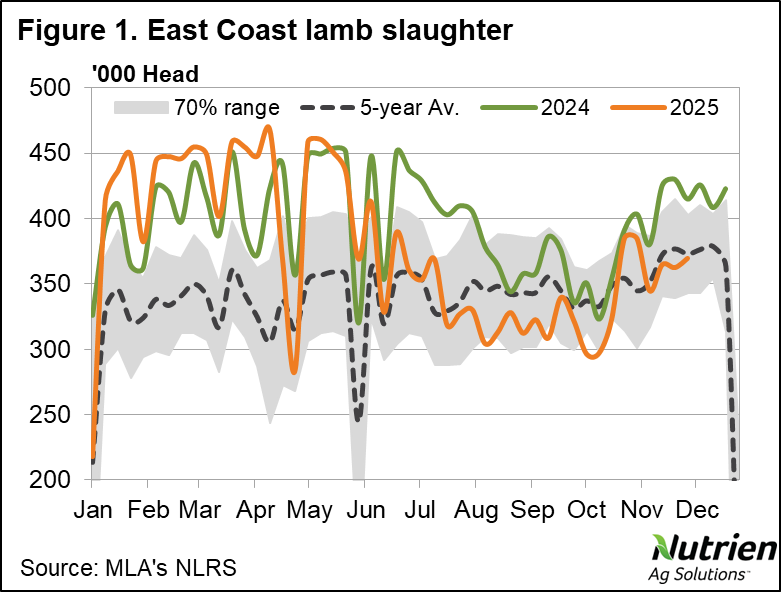
We can compare to last year however. Figure 1 shows that East Coast lamb slaughter has been higher in the first half of the year than in the preceding half. The five-year average shows this is not normally the case.
Strong first-half slaughter can be partially put down to slaughter grid weights moving higher and the proliferation of grain feeding. The big swinging factor can be maternal ewe lambs going to slaughter, rather than being retained. The last two years have seen mutton at a heavy discount to lamb, which encourages ewe lamb slaughter.
If we are indeed going into a flock rebuilding phase, as suggested by producer intentions, and backed up by a better spring in key sheepmeat areas, ewe lambs will be retained this year. The five year average on figure 1 gives a reasonable idea of where lamb slaughter sat the last time we were in a rebuild phase.

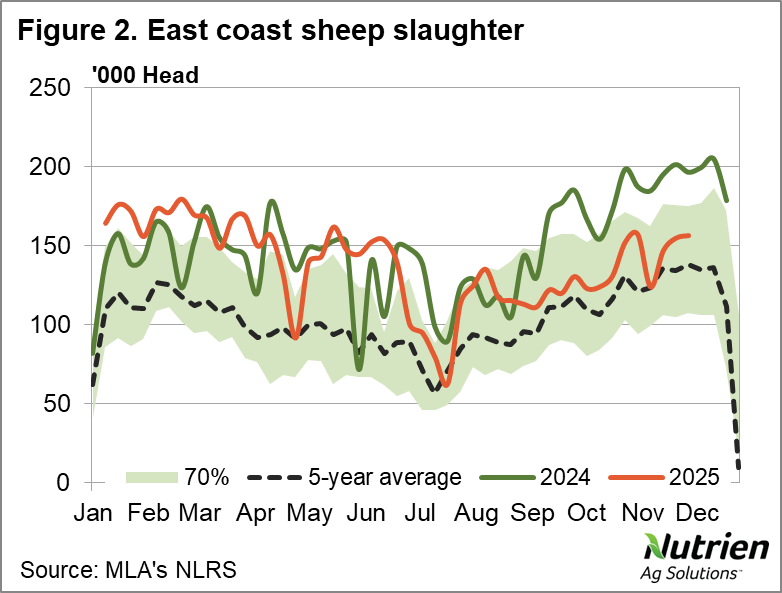
Sheep supply is much tighter than last year, but remains above the five year average (figure 2). Perhaps we are seeing the last of the old sheep that were held instead of ewe lambs, but we don’t expect to see sheep supply any stronger next year.
On the demand side, we know world red meat markets are extremely strong, with lamb and mutton being dragged along by beef. Strong export demand doesn’t look like dissipating in the medium term, although domestically we are seeing some pushback from consumers.

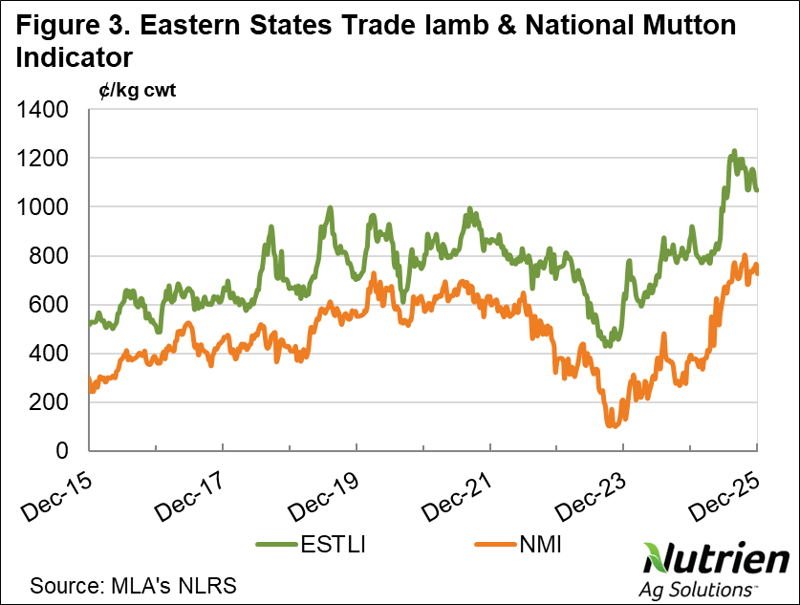
It’s easy to forget how extreme lamb and sheep prices are at the moment. Figure 3 shows that despite easing from peaks, both lamb and mutton sit at levels stronger than we’ve ever seen before. To see prices ease, supply needs to improve markedly, or demand weaken. Neither seems all that likely in the short and medium term.
Current lamb prices are no doubt encouraging flock expansion, but it takes time for it to come to fruition. Wool prices have risen, but it might not be enough to halt the joining of merinos to terminal rams. It’s hard to see prices easing too far or having a serious rally in the first half of 2026. Depending on the season, a supply squeeze could return in the winter, spiking values, before we see lamb prices ease back into single figures at the back end of 2026.

Angus Brown brings over 20 years of expertise analysing Australian agricultural markets, and also runs a mixed farming operation in Hamilton, Victoria.
Each December we save the last article of the year for a bit of a crystal ball gaze, as we try to bring together market fundamentals and work out...
Australia’s wool market posted another strong performance this week, with all micron categories attracting solid support across the three selling...
The latest ABARES outlook for livestock products has sheepmeat production dropping for the 2025–26 financial year, pushing prices higher and...