
 Matt Dalgleish
Are cattle prices really becoming more volatile
 Matt Dalgleish: Oct 20, 2026
There is a growing perception that Australian cattle prices are becoming increasingly volatile, with larger price swings becoming a more prominent...
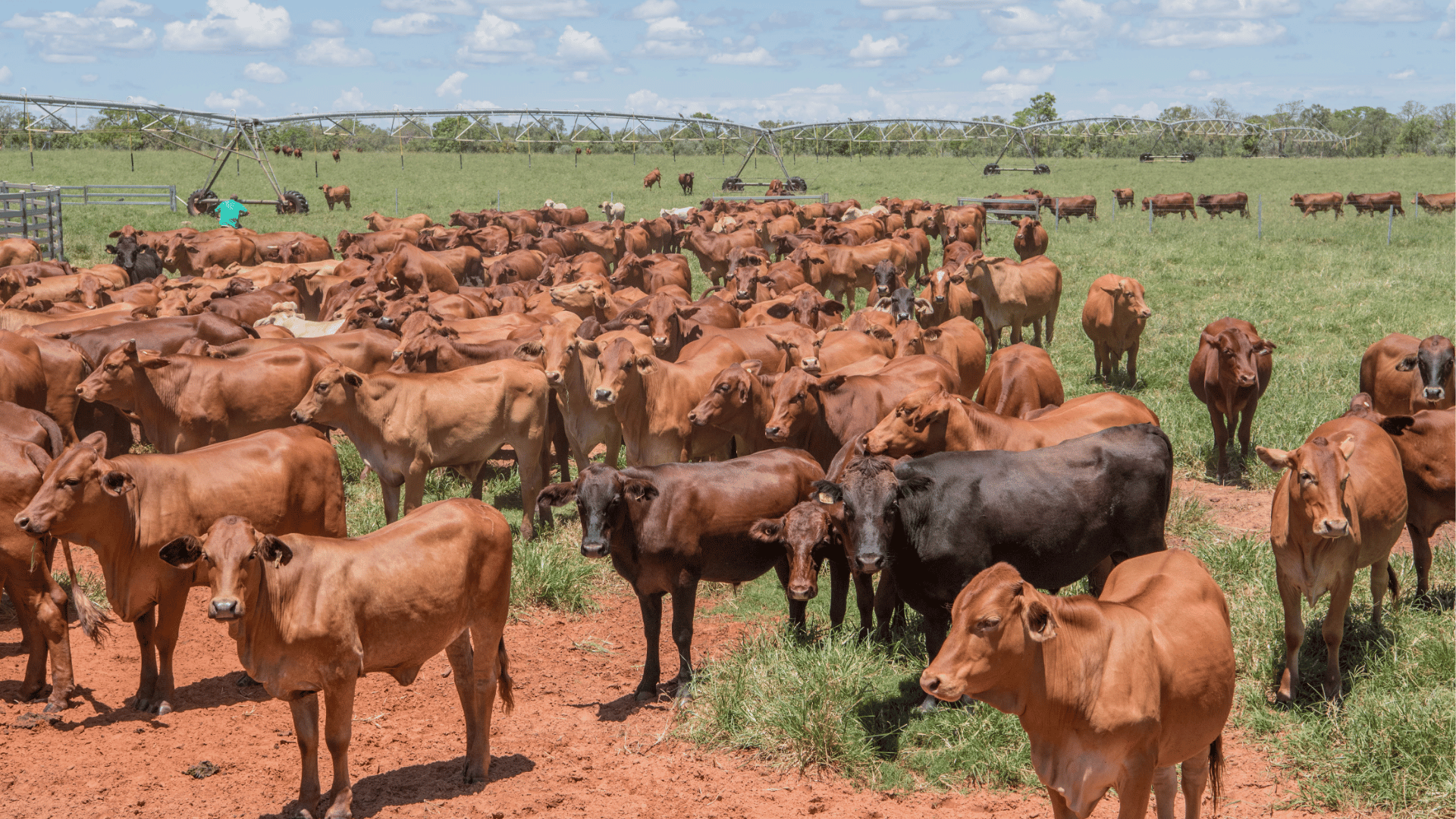
There is a growing perception that Australian cattle prices are becoming increasingly volatile, with larger price swings becoming a more prominent feature of the market.
But are cattle prices genuinely becoming more volatile, or are the larger movements simply a reflection of cattle being worth considerably more than they were historically?
There is an important distinction between the two.
When the Eastern Young Cattle Indicator (EYCI) is trading at 300c/kg, a 10pc movement is 30c/kg. At 1,000c/kg, the same percentage movement is 100c/kg. The absolute price movement is more than three times larger, yet the relative volatility remains the same.
Even adjusting historical prices for inflation does not entirely resolve this issue. Higher real prices can still generate larger absolute movements without necessarily indicating greater percentage volatility.
To investigate, Episode 3 analysed monthly inflation-adjusted cattle prices dating back to January 1953, calculating monthly percentage changes and rolling volatility measures over three- and five-year periods.
Volatility has increased, but there is a catch
The results show that Australian cattle prices have genuinely become more volatile in recent years, even after accounting for the higher price base.
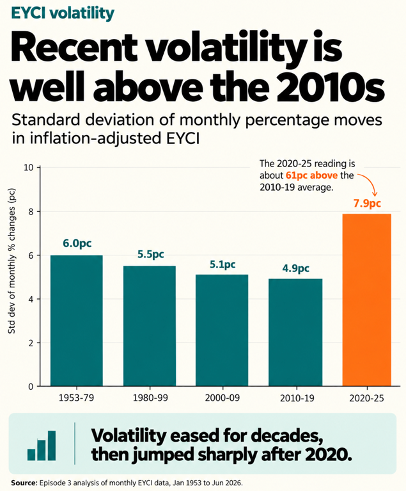
Between 2010 and 2019, the standard deviation of monthly percentage movements in the inflation-adjusted EYCI was 4.9pc. For the 2020 to 2025 period, this increased to 7.9pc, representing a rise of approximately 61pc.
The frequency of substantial monthly price movements has also increased.
During the 2010s, just 3.4pc of months recorded an inflation-adjusted EYCI movement exceeding 10pc in either direction. Between 2020 and 2025, that proportion increased to approximately 15.5pc.
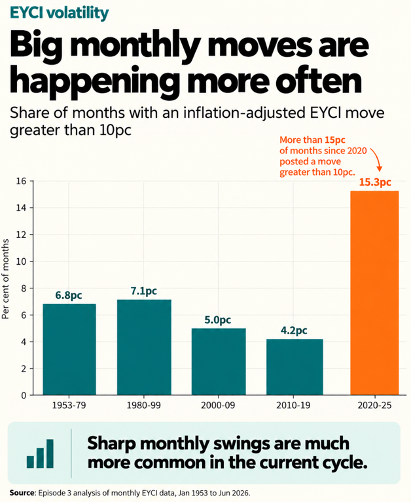
This suggests the recent cattle market has been experiencing larger and more frequent percentage price movements than during the preceding decade.
However, the longer historical record tells a rather different story.
We've been here before
The latest three-year rolling standard deviation of monthly percentage changes, calculated to June 2026, sits at 9.2pc. This places current volatility around the 92nd percentile of historical observations.
In other words, volatility has been higher than current levels during only around 8pc of the historical rolling periods examined.
That is certainly elevated, but it is not unprecedented.
The historical peak for three-year rolling volatility occurred in October 1980, reaching 11.7pc. This was approximately 27pc higher than the latest reading and reflected the enormous disruption experienced by Australian cattle markets during the 1970s.
The five-year measure reinforces this finding. Current volatility sits at 8.2pc, compared with the historical peak of 11.2pc recorded in May 1979.
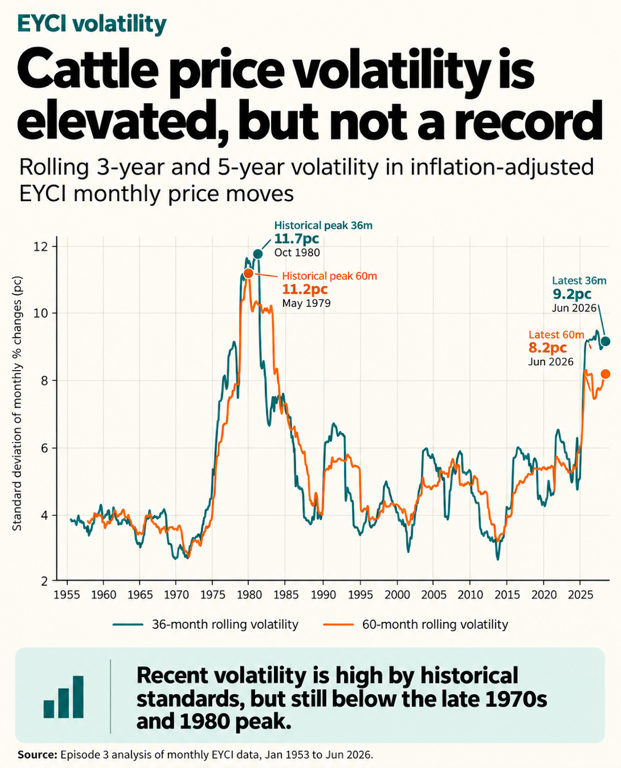
Interestingly, relative cattle price volatility generally declined over several decades leading into 2020. The recent increase therefore represents a reversal of that longer-term trend rather than evidence of prices becoming progressively more volatile throughout history.
A change in the market or just the cattle cycle?
The sharp increase in volatility since 2020 has coincided with one of the more dramatic cattle price cycles in recent decades.
Widespread drought and herd liquidation were followed by improved seasonal conditions, intense restocker competition and a substantial rebuilding phase that pushed cattle prices to record highs during 2021 and 2022.
As rebuilding demand eased and cattle supply increased, prices subsequently corrected sharply during 2023 before recovering through 2024 and 2025.
These pronounced shifts between liquidation, rebuilding and increased turnoff have contributed to the elevated volatility recorded in recent years.
It is also worth considering whether a higher underlying cattle price base is influencing how price movements are perceived. A market moving 100c/kg attracts considerably more attention than one moving 30c/kg, even if both represent exactly the same percentage change.
The historical analysis suggests Australian cattle markets have always been capable of substantial price volatility, particularly when seasonal conditions generate pronounced shifts in cattle supply and buyer competition.
What remains unclear is whether the recent increase represents a structural change in cattle price behaviour or simply an unusually pronounced cycle.
For now, the evidence points to Australian cattle prices experiencing one of their most volatile periods in several decades, but not the most volatile on record.
Cattle prices have become more volatile recently, but that doesn't necessarily mean the market is becoming inherently more volatile over the longer term.
Matt Dalgleish is a director of Episode3.net and co-host of the Agwatchers podcast.
 Matt Dalgleish: Oct 20, 2026
There is a growing perception that Australian cattle prices are becoming increasingly volatile, with larger price swings becoming a more prominent...
The forecast is looking promising for vast parts of Queensland and Northern NSW for the coming week.If you are looking for rain, of course.Rain will...
Grass is setting the pace in the cattle market, with restockers outbidding feedlots and processors on AuctionsPlus last week.