
Northern rain and the cost of freight
The forecast is looking promising for vast parts of Queensland and Northern NSW for the coming week.If you are looking for rain, of course.Rain will...
For some time, we’ve been looking at the growing herd with some concern about the prospect of a dry weather induced cattle liquidation.
While some areas which were hard hit in recent years are having a recovery of sorts, the need for feed has moved to northern NSW, and cattle are hitting the market
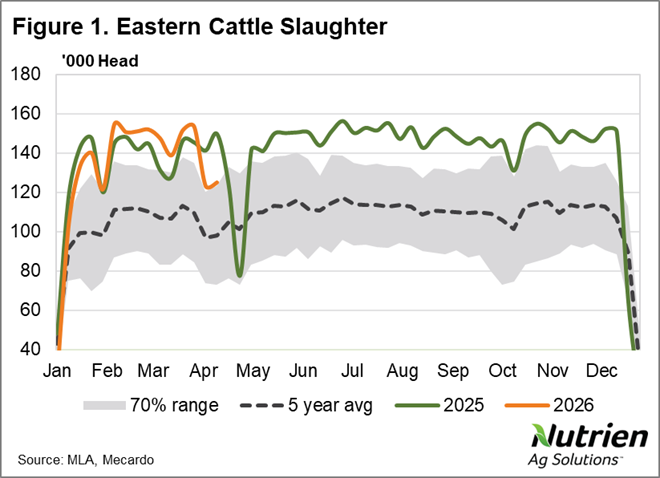
An autumn price decline used to be a relatively reliable occurrence. Spring calves and cull cows in the colder climates of central and northern NSW hit the market before winter comes and grass growth slows. This year there is added incentive to sell, with low rainfall through the Northern Tablelands, Northwest NSW and the Central West (figure 1).
The last cattle distribution map Meat and Livestock Australia (MLA) published, in 2021, placed around 1.8 million head of cattle in this part of NSW. This equated to 7.5% of the herd in 2021 but that was coming out of a severe drought. The total herd is now 2.3 million head larger, and we would expect some of the growth would have occurred in this part of NSW.
Cattle slaughter was running hot pre-Easter, with MLA weekly data showing east coast numbers hitting a new seven-year high (figure 1). On average cattle slaughter picks up in May, and through June, and with the strong cow supply, we can expect new highs in slaughter numbers.
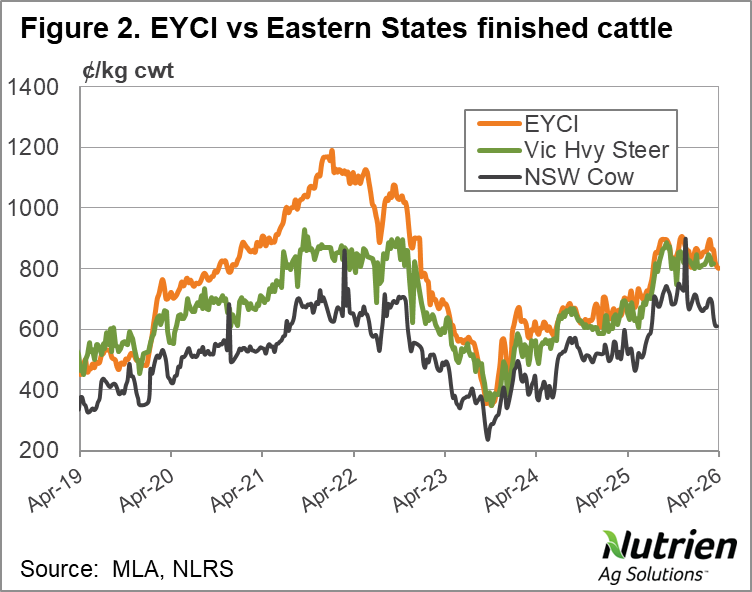
Stronger supply in the last few weeks has had an impact on price. Figure 2 shows the processor cow price has been most strongly affected, which is to be expected as these are the animals coming to market. Cow prices remain above the same time last year.
Young cattle are also being sold off, with the Eastern Young Cattle Indicator (EYCI) losing nearly 100¢, or 10% since mid-March. On the MLA website you can delve into the background data of the EYCI, and it is heifers which are currently priced weakest, valued around 720¢/kg cwt. Heifers are much cheaper than steers, which still averaged around 870¢.
Heavy finished cattle prices have also weakened, coming off March peaks by around 8%. Heavy steer prices tend to hold on the best during dry times, but an abundance of cows, offering good margins to processors, will always see other processing cattle prices weaken.
A large herd and forecast El Nino are enough to see cattle supply spike leading into winter. Whether markets continue to fall through winter will obviously depend on rainfall, and spring growth prospects. For those with feed supplies the current sell off might prove a buying opportunity.
The large herd and dry weather in key breeding areas has seen cattle supply spike.
Cows and heifers are hitting the market at cheaper rates.
El Nino will be spooking some buyers, but this might be an opportunity.
 Angus Brown brings over 20 years of expertise analysing Australian agricultural markets, and also runs a mixed farming operation in Hamilton, Victoria.

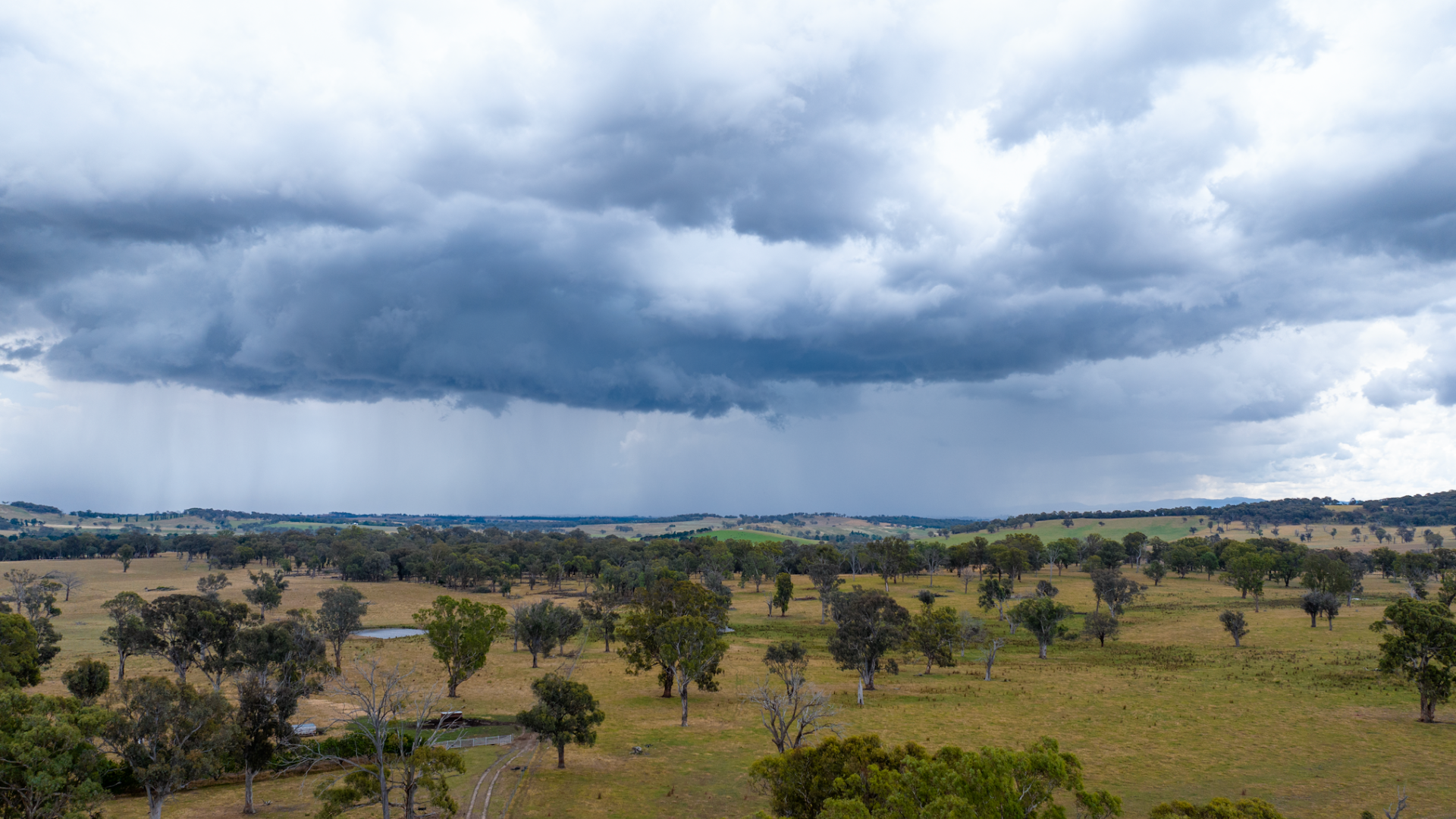
The forecast is looking promising for vast parts of Queensland and Northern NSW for the coming week.If you are looking for rain, of course.Rain will...
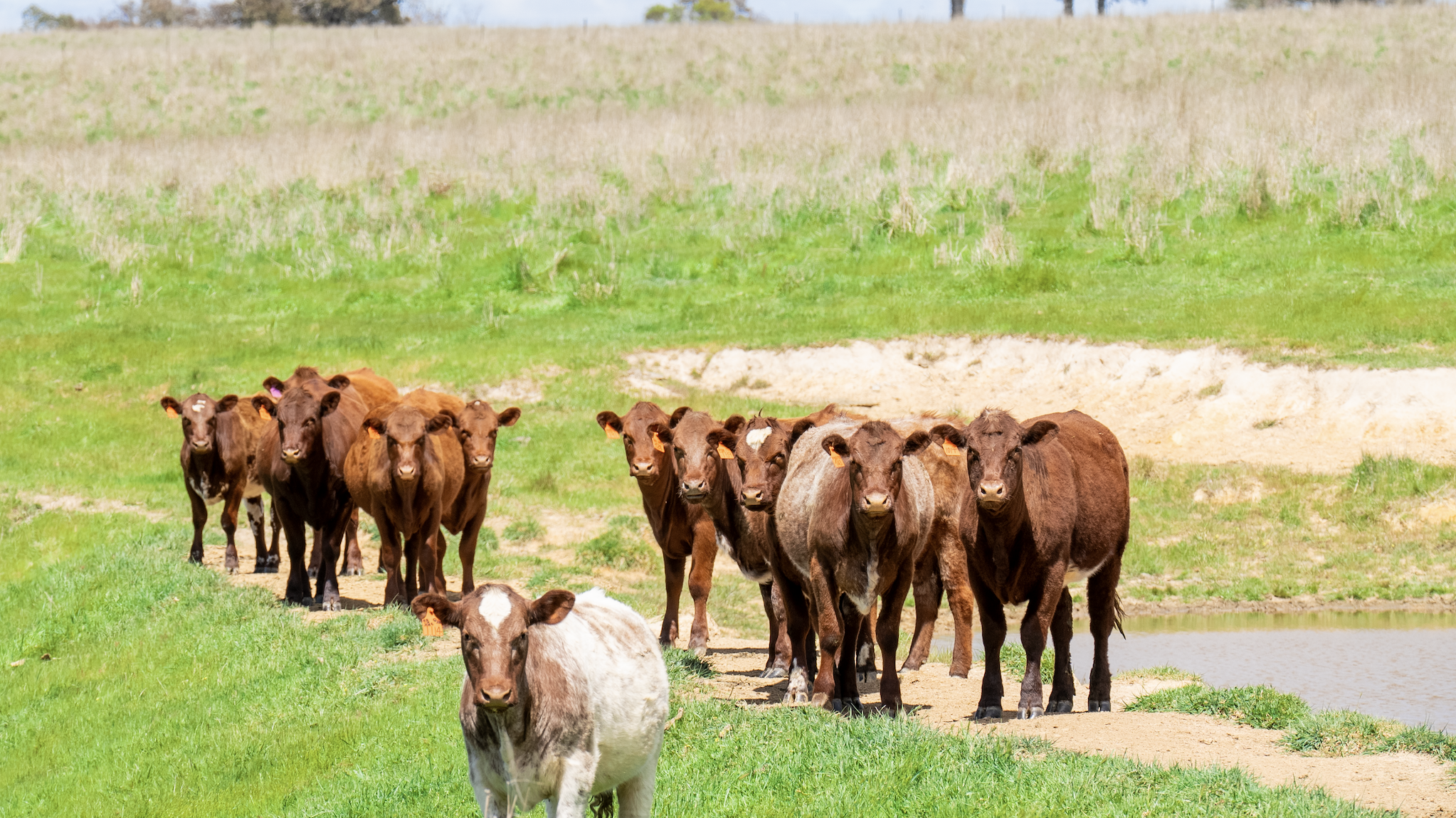
Grass is setting the pace in the cattle market, with restockers outbidding feedlots and processors on AuctionsPlus last week.
 Natasha Lobban: Oct 8, 2026
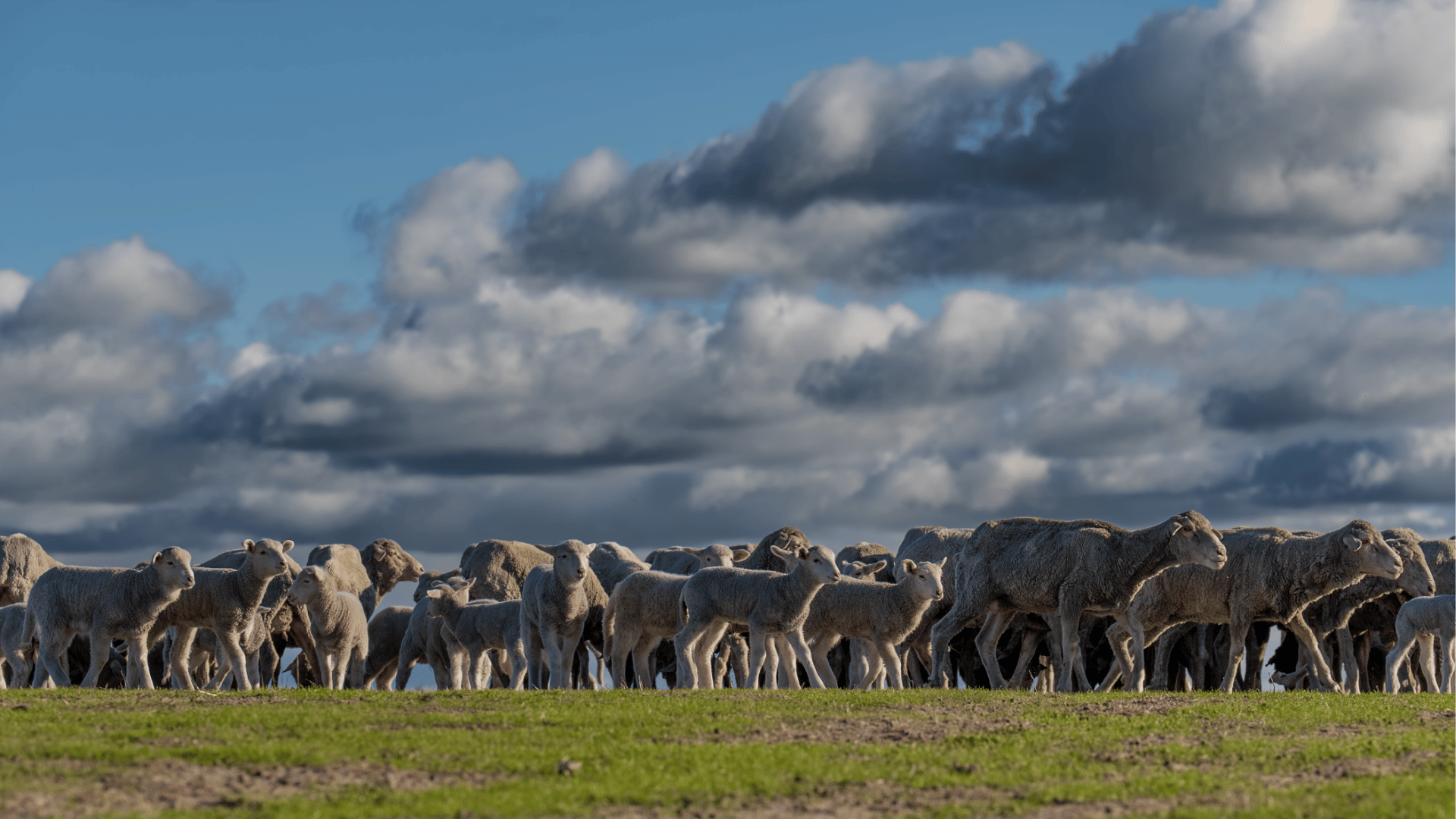
AuctionsPlus has recorded its biggest September for new season lambs in the past decade, with 218,871 head offered across the month.