


2 min read

Restockers haven’t hit the button yet

Restockers haven’t hit the button yet
Pic: AgriShots
Restockers haven’t hit the button yet
2:59

The rain was forecast, and then it fell, and cattle supply has tightened significantly. There are always a couple of waves of supply issues with big rains, with transport disruptions followed by grass growth discouraging sales. Here we look at where restocker prices might head given recent events.

After a very dry September for the entire east coast, the systems of the last week have delivered key northern cattle zones between 150% and 500% of their average October rainfall.


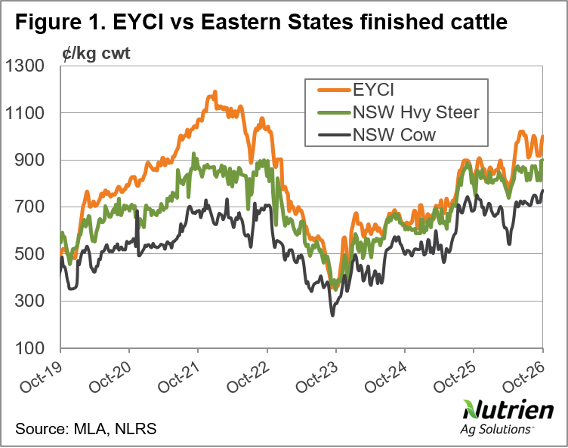
The initial tightening in processor cattle supplies, thanks to transport disruptions, started showing up in slaughter cattle markets last week.  Figure 1 shows NSW Heavy Steers and NSW Processor Cow indicators receiving a bump, with cows hitting new record highs.  Processor cattle prices were already strong and have been for some time.

With falling export beef prices and the stronger Australian dollar, processors won’t be wanting margins to be squeezed much further, which may limit upside in processor cattle prices.  

The question on the restocking front is whether we can see a repeat of the boom in young cattle prices we saw in spring and summer of 2021 and into 2022.  

Back in June, the Eastern Young Cattle Indicator (EYCI) moved to a premium to heavy steers, as restocker demand lifted.  In 2021, the wet month was November, and we can see that led to the EYCI moving to a 200¢ premium to heavy steers.


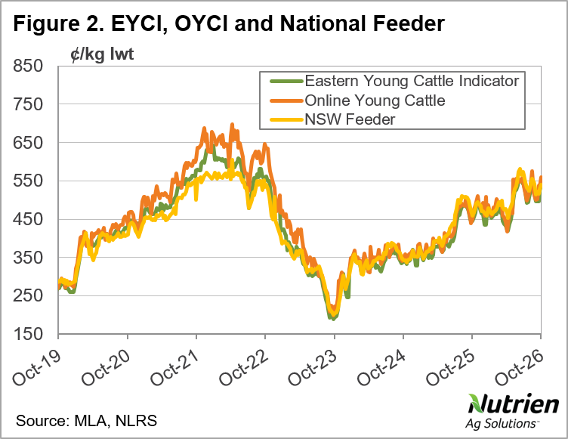
If we look a bit closer at young cattle, we can compare feeder prices with the ‘Online Young Cattle Indicator’ (OYCI), which has more of a restocker bent.  The EYCI, the NSW Feeder and the OYCI have all been tracking together for much of the last three years.  

Late 2021 shows where grass fever can take the EYCI and OYCI when late spring rain kicks off growth in the north.  The OYCI is around 100¢ off 2021-22 peaks, with finished and feeder cattle prices at similar rates.  Grain is also cheaper than 21-22, which could help lift feeder prices to new records, especially if they are to compete with restockers.

What does this mean?

The limiting factors for cattle prices are the large herd in the north and falling export beef prices.  A restocker with grass can easily ignore these factors, as costs of production dwindle when feed is in excess.  If restockers are going to hit the button, it will likely come soon.


The Bottom Line

  • Heavy rain in Queensland and northern NSW has tightened supply and lifted prices.

  • Big rains in late 2021 saw restocker cattle prices move to a significant premium to feeders and finished cattle.

  • If restockers are going to push prices higher, we will likely see it in coming weeks.


 Angus Brown brings over 20 years of expertise analysing Australian agricultural markets, and also runs a mixed farming operation in Hamilton, Victoria. 


QLD Processors at Capacity as Production continues to lift: ABS Report Card

QLD Processors at Capacity as Production continues to lift: ABS Report Card

Yesterday, the Australian Bureau of Statistics (ABS) released the Quarter 3 2026 Slaughter & Production numbers for the red meat industry. This...

Read More >
How volatile are other livestock prices compared to young cattle?

How volatile are other livestock prices compared to young cattle?

Our recent analysis of Eastern Young Cattle Indicator (EYCI) volatility generated plenty of interest, particularly around whether the larger price...

Read More >
Cattle supply squeeze is on

Cattle supply squeeze is on

There is nothing like some early summer rain in the north to throw normal cattle supply trends into disarray. Cattle slaughter has tanked as rain has...

Read More >