
Compare the pair: same sale, same age, same breed. Different reserves, different results
 Michael McManus: Nov 20, 2026
Huge numbers of cattle have been moving through feedlots and processors in 2026, with new 48-year records seemingly being hit every quarter. Some of the interesting numbers this quarter come from the grainfed sector, along with a decline in female numbers.
We have been talking for some time about what looks like a significant structural change happening in the Australian cattle industry. The latest Australian Bureau of Statistics slaughter and beef production data, along with the MLA/ALFA lotfeeding survey, confirm continuing change.
While total cattle slaughter eased marginally in the September quarter, it remains at the extreme end of the range. The last twelve months have seen 9.612 million head of cattle slaughtered. The highest level since 1979.
Unlike the 1978 cattle crash, this time prices are very good, and the strong slaughter levels don’t seem to be causing herd liquidation.
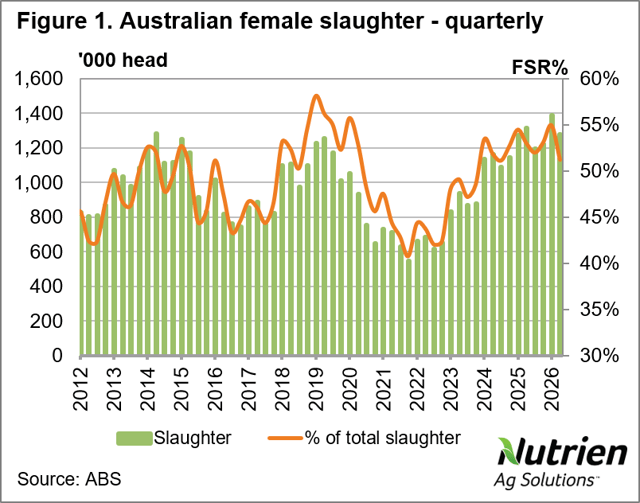
Female cattle slaughter number were down in September and were 3% lower than last year. This was compensated by male slaughter being up 4%, over 1.2 million head for the first time since 1979.
Long-time readers will know we like to use female slaughter as a pointer of where the herd is heading, while male slaughter tells us where the herd was 12 months to two years ago.
Female cattle slaughter really picked up in the March quarter of 2024 (figure 1), yet we are killing huge numbers of male cattle still.
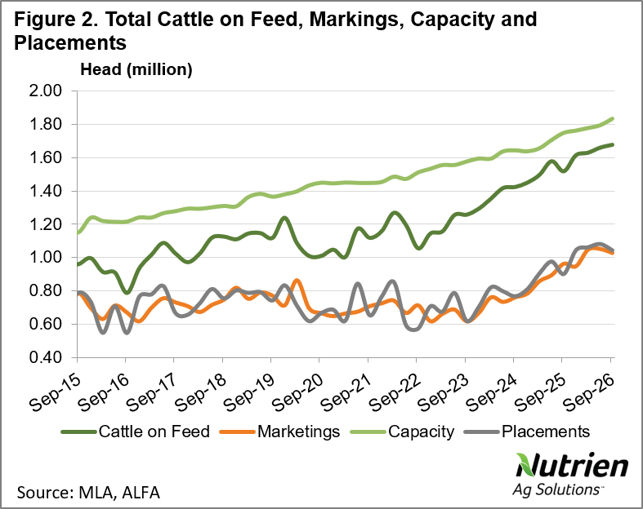
If there are fewer cattle out there, thanks to strong female slaughter for the last two and a half years, it’s not showing up in feedlot data. Cattle on feed hit another record in September, hitting 1.677 million head (figure 2). Placements were down slightly, but at the same level as last year.
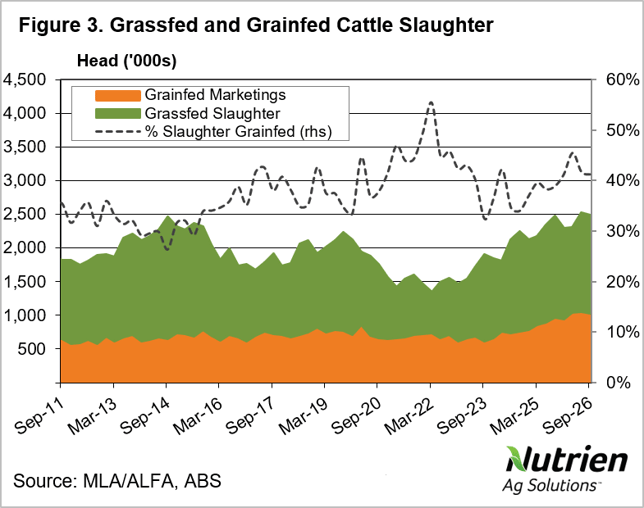
Grassfed cattle remain the major source of stock for processors (figure 3), but grainfed cattle are helping drive production and carcase weights. With more than 1 million head of cattle consistently coming out of feedlots, grassfed supply will drive volatility in supply and price.
Rain in northern cattle areas has seen supply tighten, which should see slaughter decline in the fourth quarter. Processors are now facing some headwinds in beef export markets, which is a bit of a switch from where we have been. Grainfed cattle supply is negating some of the extreme volatility we used to see when grassfed cattle supplies dwindled.
 Angus Brown brings over 20 years of expertise analysing Australian agricultural markets, and also runs a mixed farming operation in Hamilton, Victoria.

 Ripley Atkinson: Nov 18, 2026
Yesterday, the Australian Bureau of Statistics (ABS) released the Quarter 3 2026 Slaughter & Production numbers for the red meat industry. This...
 Matt Dalgleish: Nov 17, 2026
Our recent analysis of Eastern Young Cattle Indicator (EYCI) volatility generated plenty of interest, particularly around whether the larger price...