
 Andrew Woods
Northern rain and the cost of freight
The forecast is looking promising for vast parts of Queensland and Northern NSW for the coming week.If you are looking for rain, of course.Rain will...
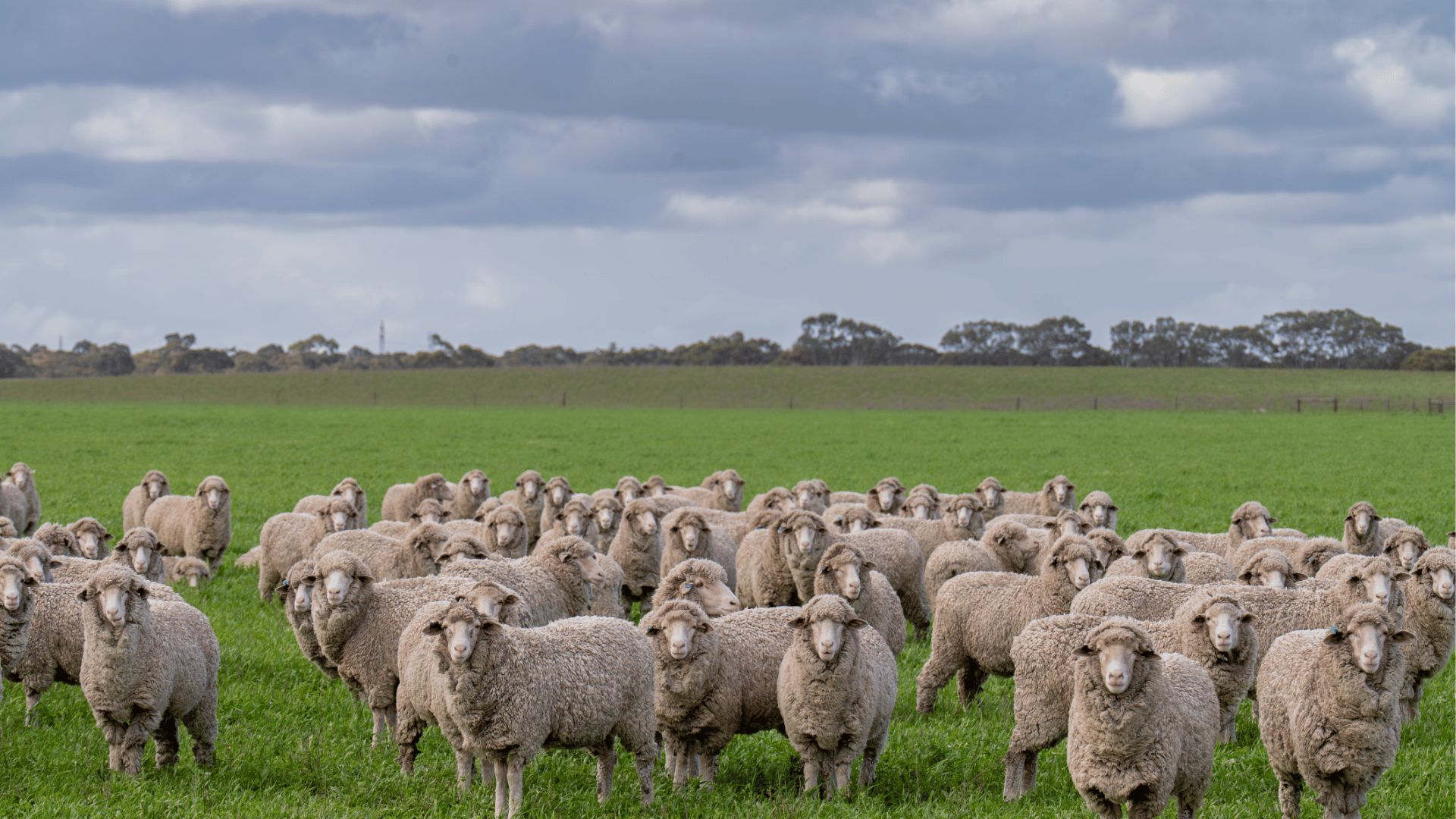
The makeup of the Australian merino wool clip, as with other merino producing countries, has changed a lot since the 1990s. Basically the industry has stopped producing what was seen as broad merino wool 30 years ago, although there has been something of a renaissance in New Zealand. This article takes a brief look at the change in average micron across regions in Australia.
Merino wool is distributed in a bell shape around the average micron, with some two thirds of production within 1.2-1.5-microns either side of the average.
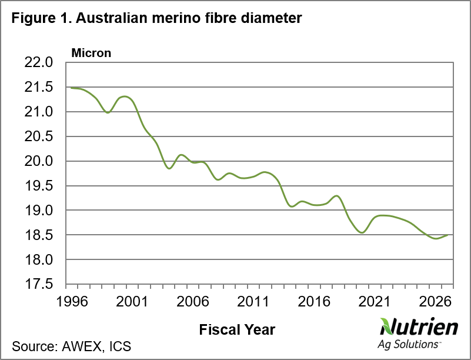
Figure 1 shows the average fibre diameter of merino wool sold at auction in Australia by season, with the current season using data to last week only. In 30 years, the fibre diameter has fallen from 21.5-micron to 18.5-micron, with some dips and dales along the way as seasonal conditions pushed the micron above and below the downward trend. The rate of fall appears to have been slowed in the past decade, perhaps because of the relative strength of sheep meat prices and also most of the broader merino wool production has been abandoned.
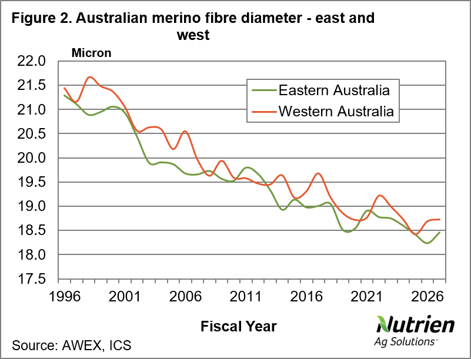
Figure 2 splits the Australian merino fibre diameter into eastern and Western Australian regions. As a rule, the Western Australian merino clip has been 0.2-0.3-micron broader on average, except for when seasonal conditions cause the averages to come together, very occasionally inverting. The merino fibre diameter in the east and west has followed the same trend.
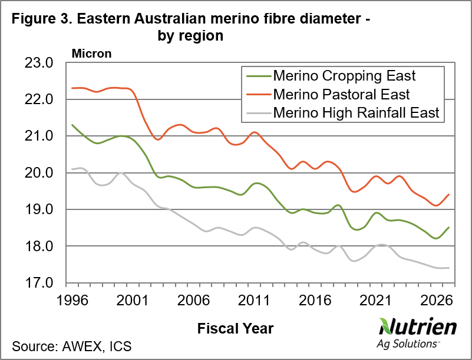
In Figure 3 the eastern merino clip is broken into three regions, the pastoral, cropping and high rainfall. Once again, the three regions have followed the same trend. Merino wool from the pastoral regions started above 22-micron in the mid-1990s and are now in the 19.0-to-19.5-micron range. The high rainfall range began around 20-micron in the mid-1990s and now are near 17.5 micron, with the cropping regions in the middle. Can you imagine thinking in the 1990s that in 2026 the average fibre diameter would be 19.0-19.5 in merino wool from pastoral regions?
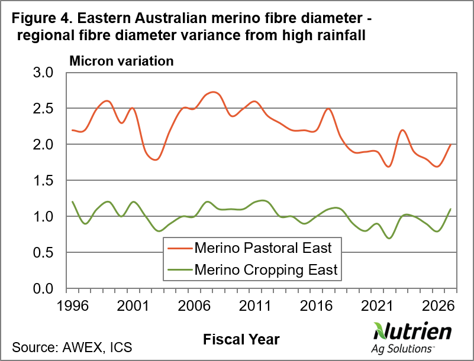
Figure 4 shows the pastoral and cropping merino average fibre diameter difference to the high rainfall region for the 30-year period. The cropping region has been consistently 1 micron broader, and the pastoral regions has been less consistently 1.7 to 2.7 microns broader.
While premiums for fibre diameter and discounts wax and wane, it remains the dominant quality in determining wool price. It also continues to offer a path for regular productivity improvement, something the sheep (wool and sheep meat) industry has been abysmal at for decades.
While merino production has shrunk in recent decades, in reality it has been broader micron category production which has been jettisoned, with a focus on finer micron categories. All production regions have followed this trend. There seems to be more productivity gains to be gained from this trend, even while taking advantage of relatively high sheep meat prices.
The average merino fibre diameter has trended lower in all Australian regions during the past 30 years.
Merino micron averages in the eastern pastoral and cropping zones are now where the eastern high rainfall region were 15-20 years ago.
There is plenty of scope for the pastoral and cropping regions to improve price and productivity with lower fibre diameter merino wool.

Andrew Woods is the founder of Independent Commodity Services providing tailored insights to growers, brokers, traders and exporters, with decades of experience, Andrew’s analysis bridges practical farming knowledge and market expertise, with a strong focus on the wool industry.

The forecast is looking promising for vast parts of Queensland and Northern NSW for the coming week.If you are looking for rain, of course.Rain will...
Grass is setting the pace in the cattle market, with restockers outbidding feedlots and processors on AuctionsPlus last week.
 Natasha Lobban: Oct 8, 2026
AuctionsPlus has recorded its biggest September for new season lambs in the past decade, with 218,871 head offered across the month.