
Northern rain and the cost of freight
 Andrew Woods: Oct 14, 2026
The forecast is looking promising for vast parts of Queensland and Northern NSW for the coming week.If you are looking for rain, of course.Rain will...
Australia’s cattle herd is entering a period of gradual contraction, but the production system supporting it looks very different to previous cattle cycles.
Meat & Livestock Australia's September Cattle Industry Projections estimate the national herd at about 30.8 million head in 2026, before easing to just under 30 million by 2028. Despite the decline, cattle turn-off is expected to remain historically high.
The key to understanding this apparent contradiction is productivity. Australian producers are increasingly generating more output from the breeding herd while moving cattle through the production system more efficiently.
The productivity gains have not occurred overnight.
Decades of genetic selection for fertility, growth, weight-for-age and carcase performance, alongside improvements in herd management, nutrition and infrastructure, have increased the productive capacity of the herd.
These gains have become increasingly evident over the past five years, particularly across northern Australia, following several consecutive favourable seasons.
The introduction of Wagyu bloodlines into segments of the northern herd, alongside broader long-term genetic selection, is one example of how producers have progressively adapted herd genetics to target meat quality while also improving reproductive performance.
Combined with better reproductive management and improved calf survival through favourable seasons, these changes allow producers to be more selective about the females they retain.
Strong cull cow values have also provided an opportunity to turn off older, empty or lower-performing cows and replace them with younger heifers.
This is contributing to a gradual shift towards a younger, more productive breeding base, rather than simply retaining more females to maintain production.
The result is greater productive capacity from the breeding herd with performance increasingly determined by the productivity of each animal, rather than simply the number of cattle on farm.
Another major shift has been a reduction in the time required to move cattle from birth to turn-off.
Greater backgrounding and feedlot capacity, combined with improved growth rates and weight-for-age, mean steers that may once have remained on grass for another season, can move into finishing systems earlier.
Growing feedlot capacity has been a key driver of this trend with more than four million head turn off over a 12-month period for the first time.
These productivity gains have important implications for producers.
Moving finishing cattle through the system earlier can reduce competition for pasture, potentially freeing up feed for breeders and allowing producers to carry a more productive herd rather than simply a larger one.
The shift is particularly evident in northern Australia.
In Queensland and the NT, calves now account for 30% of the herd, up from 27%, while breeders have increased from 48% to 50%.
Simultaneously, the proportion of other cattle fell from 25% to 19%.
This is changing the relationship between herd size and beef output.
For producers, the gains are clear: more calves from the breeding base, more kilograms produced per animal and fewer days from birth to turn-off.
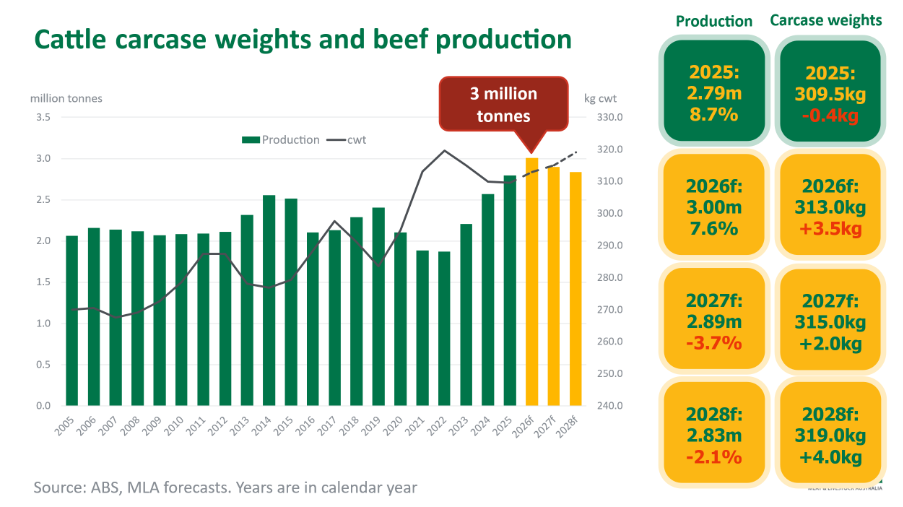
Together, these productivity improvements are helping Australian beef production exceed three million tonnes annually, even as herd numbers ease.
Access the full report here MLA’s September Cattle Industry Projections.
Stay ahead of the market. Join MLA's Market Information team on October 7 at 11am for an in-depth look at the latest Sheep Projections and the key drivers influencing flock numbers, production, slaughter and exports over the coming years.
Register your interest for the online 2026 Sheep Projections Webinar
Long-term improvements in genetics, reproduction and herd management are increasing the productive capacity of the Australian cattle herd.
A younger breeding herd and faster movement of cattle through finishing systems mean fewer cattle need to be carried for extended periods.
These efficiency gains are helping underpin record beef production of more than 3 million tonnes in 2026.

 Andrew Woods: Oct 14, 2026
The forecast is looking promising for vast parts of Queensland and Northern NSW for the coming week.If you are looking for rain, of course.Rain will...
Grass is setting the pace in the cattle market, with restockers outbidding feedlots and processors on AuctionsPlus last week.
 Natasha Lobban: Oct 8, 2026
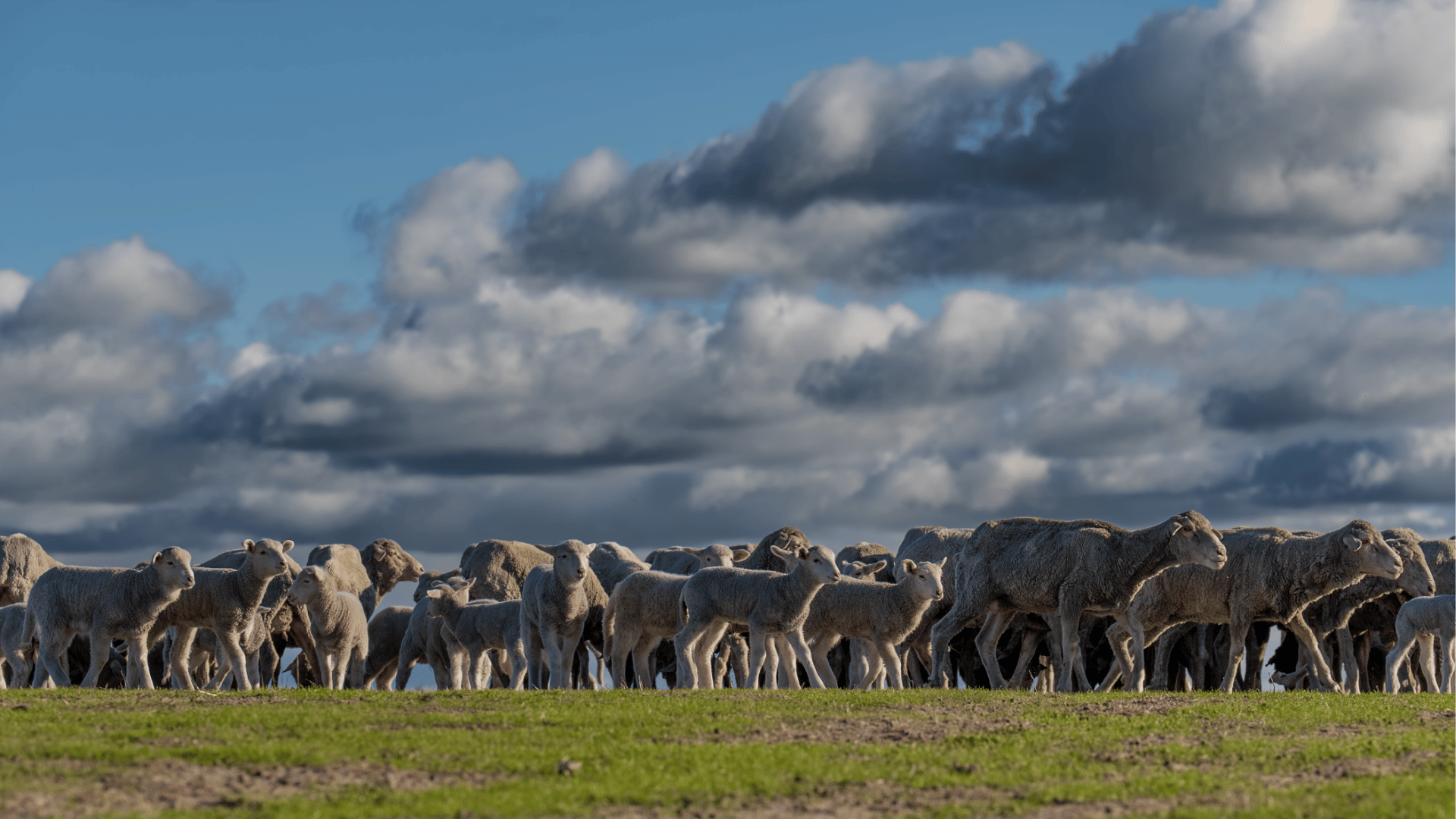
AuctionsPlus has recorded its biggest September for new season lambs in the past decade, with 218,871 head offered across the month.