
 Matt Dalgleish
Northern rain and the cost of freight
 Andrew Woods: Oct 14, 2026
The forecast is looking promising for vast parts of Queensland and Northern NSW for the coming week.If you are looking for rain, of course.Rain will...
The national Beef Producer Intentions Survey (BPIS) results published by Meat & Livestock Australia show that Australia’s breeding female cattle herd expanded between 2023 and 2025, but the growth was not spread evenly across breed types. The headline number is a larger breeding herd, but the more interesting story is the reshaping of the breed mix underneath it.
Across the listed breed categories, estimated breeding female numbers increased from 17.57 million head in 2023 to 20.15 million head in 2025. That is an increase of 2.58 million head, or 14.7 per cent. However, several breeds grew much faster than that, while others lost ground despite the larger national breeding base.
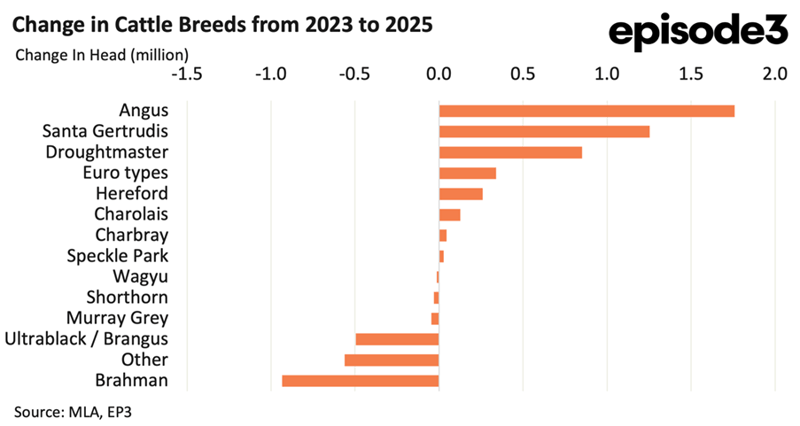
Angus recorded the largest absolute increase. Estimated Angus breeding females rose from 5.75 million head in 2023 to 7.51 million head in 2025, a lift of 1.76 million head, or a 30.5 per cent gain in Angus numbers. Angus was already the largest breed category in the national breeding herd, but it became even more dominant over the two-year period. Its share of listed breeding females increased from about 32.7 per cent to 37.3 per cent, a rise of 4.5 percentage points.
The standout proportional mover was Santa Gertrudis. Santa numbers increased from 673,963 head in 2023 to 1.93 million head in 2025. That is a gain of 1.25 million head, or 185.9 per cent. In share terms, Santa Gertrudis moved from 3.8 per cent of listed breeding females to 9.6 per cent. That makes it the second-largest absolute growth breed behind Angus and the fastest proportional grower among the listed breed categories.
Droughtmaster also gained strongly, rising from 1.18 million to 2.03 million head. That was an increase of 850,226 head, or 71.8 per cent. Its share lifted from 6.7 per cent to 10.1 per cent. Together, the growth in Santa Gertrudis and Droughtmaster points to a notable lift in northern-adapted breeds, even though not all northern breed types moved the same way.
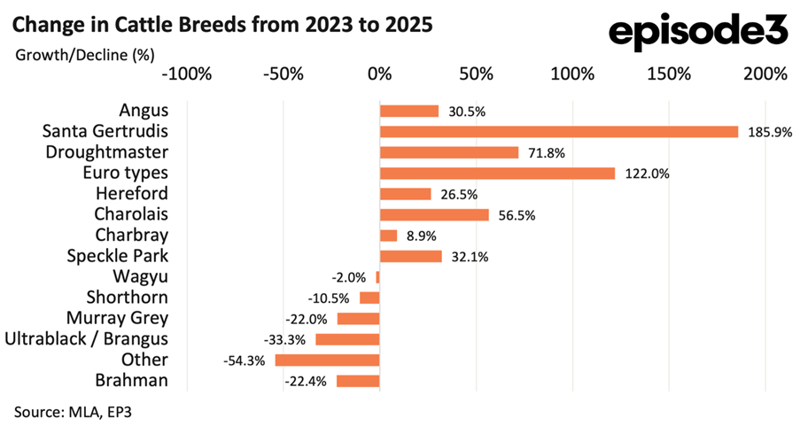
Euro types, including Simmental and Limousin, also expanded sharply from a smaller base. Their numbers increased from 278,958 to 619,335 head, a rise of 340,377 head, or 122.0 per cent. Hereford numbers lifted by 260,086 head, or 26.5 per cent, while Charolais rose by 127,143 head, or 56.5 per cent. Speckle Park also increased by 32.1 per cent, although its total numbers remain relatively small compared with the larger breed categories.
The declines are just as important to the story. Brahman remained a major national breed category, but its numbers fell heavily, from 4.18 million head in 2023 to 3.24 million head in 2025. That is a decline of 934,737 head, or 22.4 per cent. Its share of listed breeding females fell from 23.8 per cent to 16.1 per cent. In other words, Brahman still holds a large place in the national herd, but its weighting reduced materially across the survey period.
Ultrablack and Brangus also fell sharply. Estimated breeding females dropped from 1.49 million to 990,737 head, a decline of 495,493 head, or 33.3 per cent. Their share fell from 8.5 per cent to 4.9 per cent. The broad “Other” category more than halved, falling by 561,637 head, or 54.3 per cent. That could reflect a genuine reduction in those cattle, but it may also indicate that more producers reported cattle into defined breed categories in later surveys.
Wagyu was slightly lower, down 14,022 head, or 2.0 per cent. Shorthorn fell by 31,286 head, while Murray Grey declined by 45,551 head. These changes were modest in national head-count terms compared with Brahman, Other and Ultrablack/Brangus, but they still show that the expanding national breeding herd was not lifting all breeds.
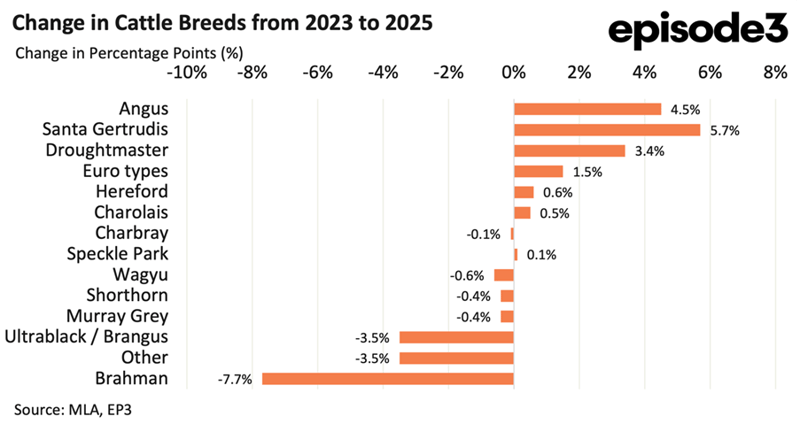
The main point is that herd growth and breed growth are not the same thing. The listed breeding female herd expanded by 14.7 per cent, so some breeds needed to rise simply to hold their position. Angus, Santa Gertrudis, Droughtmaster, Euro types, Hereford and Charolais all increased faster than the overall listed herd, meaning they gained share as well as head count. Charbray and Wagyu did not keep pace with the broader herd, while Brahman, Ultrablack/Brangus, Other, Shorthorn and Murray Grey lost share.
For Santa Gertrudis, the result is particularly striking. The breed did not just benefit from a larger national herd. It moved from a relatively modest national category in 2023 to one of the major growth breeds by 2025. In absolute terms, only Angus added more breeding females. In proportional terms, Santa Gertrudis was the clear leader among the main listed breeds.
The national breed picture from the BPIS is therefore one of expansion, but also reallocation. Angus strengthened its already dominant position. Santa Gertrudis and Droughtmaster gained significant ground. Euro types increased from a small base. Brahman and Ultrablack/Brangus lost national weighting. The breeding herd grew, but the breed mix changed substantially along the way.
Matt Dalgleish is a director of Episode3.net and co-host of the Agwatchers podcast.

 Andrew Woods: Oct 14, 2026
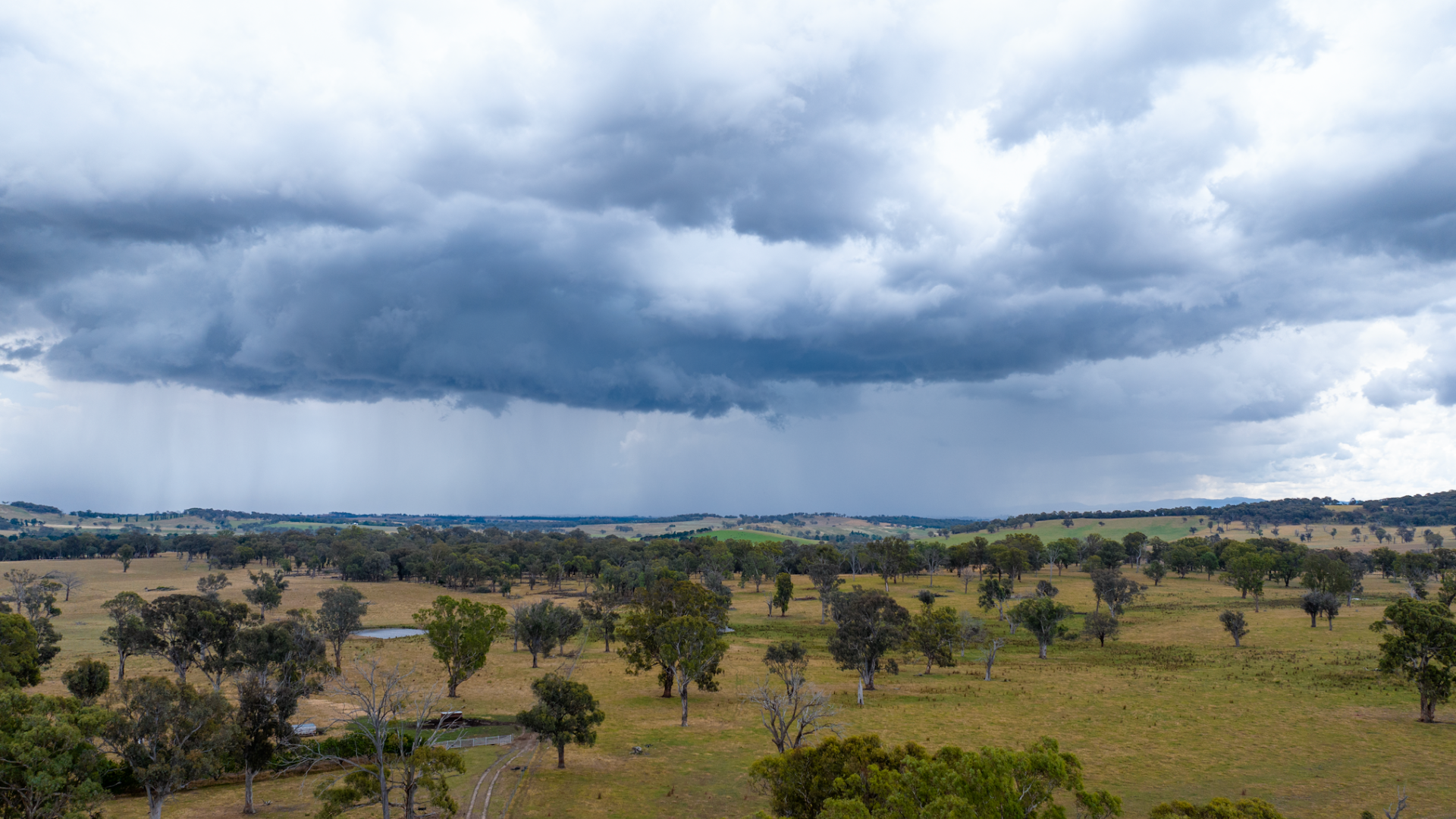
The forecast is looking promising for vast parts of Queensland and Northern NSW for the coming week.If you are looking for rain, of course.Rain will...
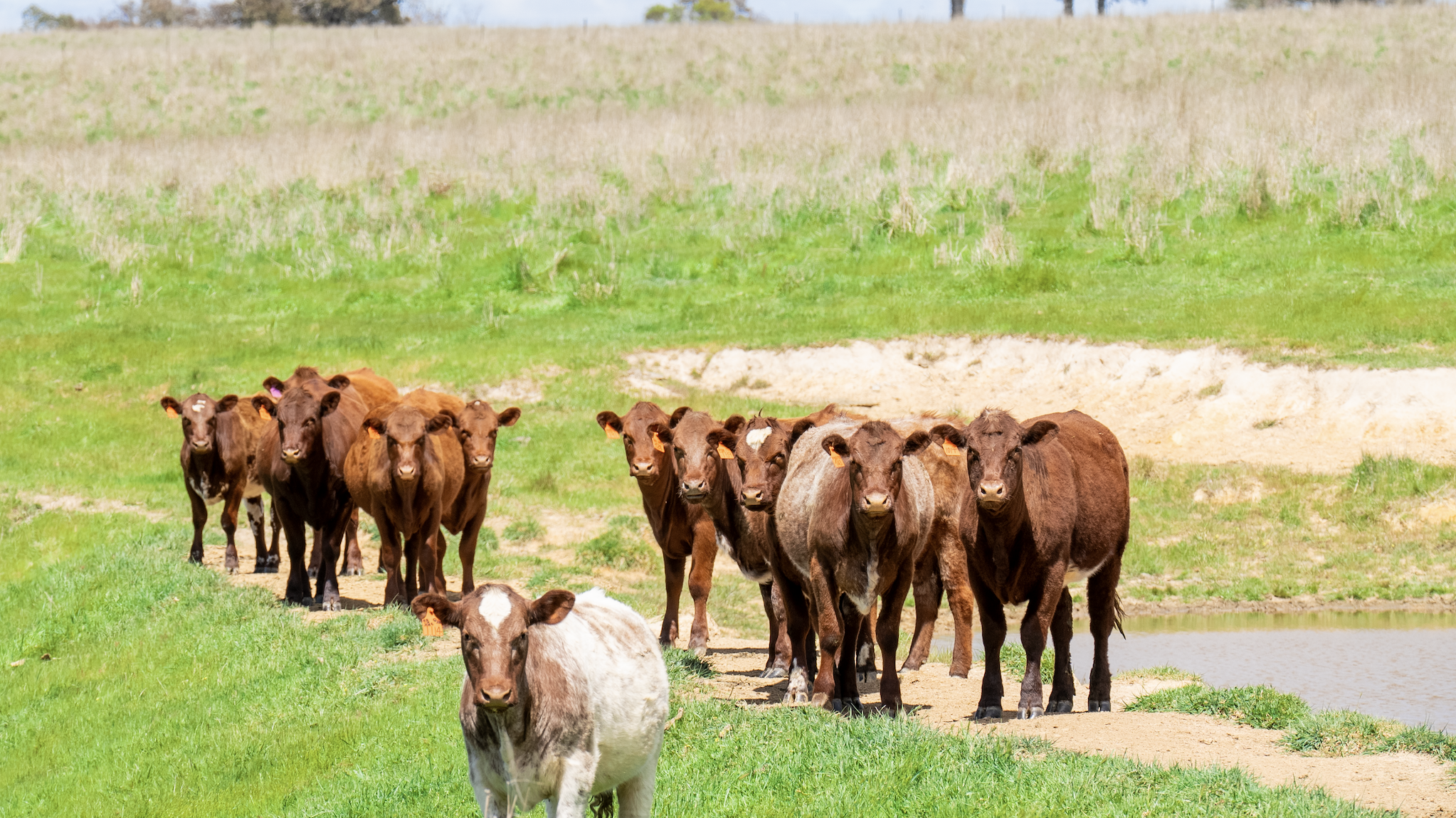
Grass is setting the pace in the cattle market, with restockers outbidding feedlots and processors on AuctionsPlus last week.
 Natasha Lobban: Oct 8, 2026
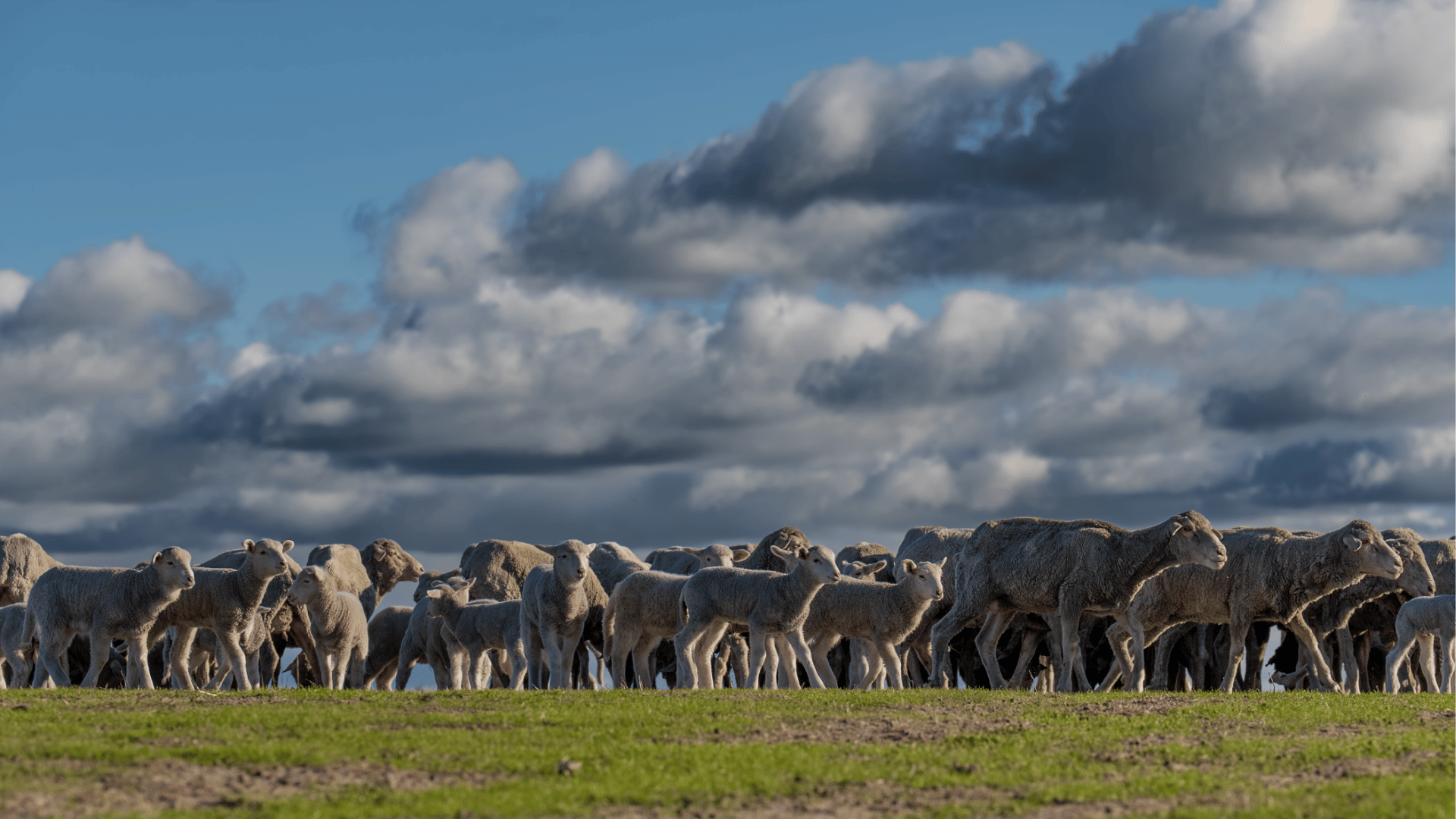
AuctionsPlus has recorded its biggest September for new season lambs in the past decade, with 218,871 head offered across the month.