
2 min read

Tighter cattle supply in the south

Tighter cattle supply in the south
Pic: AgriShots
Tighter cattle supply in the south
2:58

Cattle supply and slaughter are some of the key drivers of price, and something we like to keep an eye on.

This year we have seen somewhat of a return to typical winter slaughter patterns, at least in the south, and it’s helping support prices.

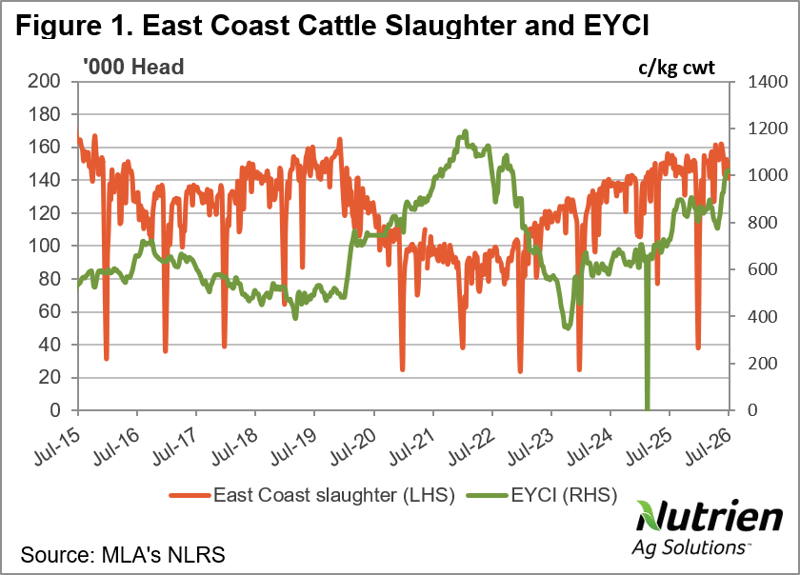
Figure 1 is an interesting study. It shows east coast weekly cattle slaughter and the Eastern States Young Cattle Indicator (EYCI). We can see a very broad trend of falling slaughter bringing rising prices, and vice versa.

The past two and a half years have defied the previous trend, with rising slaughtering and rising prices. We know that the reason for this is strong export demand and prices, which have been in place since 2024. Slaughter capacity has increased while export demand has continued to grow, seeing prices rise.

Strong slaughter and very high prices, like seen now, indicate the cattle industry is making record revenue. Some of the shine has been taken off by higher costs, but those with cattle to sell are doing well.

Zooming in on more recent supply movements, we can see in figure 2 that this year saw cattle slaughter peak in April and May, before easing into June and July. We need to be a little wary of July numbers, as Meat and Livestock Australia (MLA) report that a Queensland processor has discontinued contributing to slaughter numbers in the week ending July 5. In that week Queensland reported slaughter dropped around 8,500 head.

Queensland slaughter has been relatively steady since May and cattle numbers are strong in the north. In Victoria and NSW, a more normal winter supply pattern has prevailed, with July slaughter down around 15% and 11% respectively compared to May.

Figure 2 shows it is the southern state dragging slaughter below last year’s levels, which suggests that either females are being held, or total supply is weaker. It’s likely a bit of both, but slaughter remains much higher than previous rebuilds.

What does this mean?

Winter supply tightening in the south is not unusual. Last year’s stronger winter numbers were more of an anomaly. Traditionally cattle supply picks up in mid spring, but the rise of lot feeding has thrown some of the seasonality out the window.

While seasonal conditions are good cattle supply is unlikely to change drastically. The spectre of El Nino will keep producers on edge and could see some quick swings in supply and price like we saw in autumn.


The Bottom Line

  • It’s unusual to see strong slaughter rates and strong prices simultaneously.

  • Cattle slaughter has weakened in winter, driven largely by southern states.

  • Traditionally cattle slaughter increases in spring, which could see prices weaken.


 Angus Brown brings over 20 years of expertise analysing Australian agricultural markets, and also runs a mixed farming operation in Hamilton, Victoria. 


Record prices headline strong new season lamb run

Record prices headline strong new season lamb run

New season lamb prices have hit an all-time high for the January to August period, averaging $229.14 a head across all categories on AuctionsPlus, a...

Read More >
Mutton volume and price ratios

Mutton volume and price ratios

Sheep meat prices are trading at high levels anyway they are presented, with mutton well and truly holding its own. This article takes a look at...

Read More >
Slaughter resets 50-year highs as beef production breaks new records

Slaughter resets 50-year highs as beef production breaks new records

Today, the Australian Bureau of Statistics (ABS) released the Quarter 2 2026 slaughter and production numbers for red meat and livestock.

Read More >