
 Andrew Woods
Northern rain and the cost of freight
 Andrew Woods: Oct 14, 2026
The forecast is looking promising for vast parts of Queensland and Northern NSW for the coming week.If you are looking for rain, of course.Rain will...

As the greasy wool market prepares to restart in Australia after the mid-year recess, there is uncertainty about where prices are headed.
On one hand low supply/stocks are supportive and on the other hand demand at the retail end is yet to be tested for the upcoming northern hemisphere autumn/winter while the steep rise in prices during the past season will be causing some reassessment in the supply chain.
Given the balance between low supply/stocks and uncertain demand, which is part of the processing cycle at this time of the season, it seems best to fall back on median seasonal price patterns as a guide to what price is likely to do in the next few months.
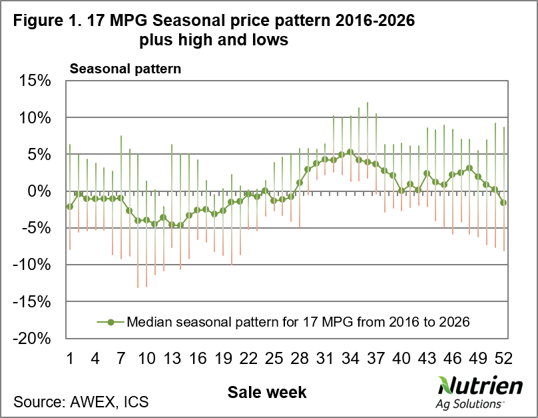
Figure 1 looks at the median seasonal price cycle for the 17 MPG in Australian dollar terms for the past decade and also shows the 90th (high) and 10th (low) percentile seasonal price movement. The highs and lows are generally well spread around the median, but in the spring tend to be concentrated in negative territory. This means the chances of prices easing into the spring are high, with the median price falling by around 5% which equates to a fall of 127 cents for the 17 MPG from the closing price in July.
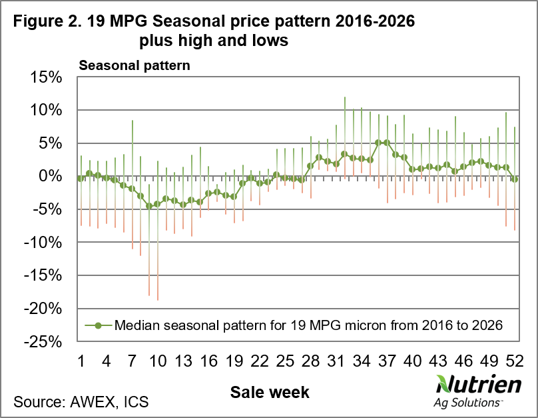
Figure 2 repeats the exercise for the 19 MPG. It has a similar pattern with a fall in the median seasonal price of around 5%, which is around 113 cents on the closing July quote. The big falls seen around sale weeks nine and ten (depicted by the low) were in 2019, as the market went into a classic down cycle due to poorer economic conditions and in 2020 as the market went into a second consecutive downturn this time driven by the pandemic.
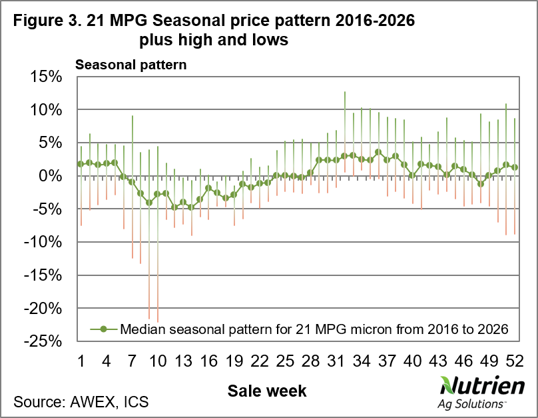
Figure 3 is the seasonal pattern for the 21 MPG. It has a slightly greater fall for the median seasonal price pattern around 7% which equates to a fall of 149 cents from the July closing quote.
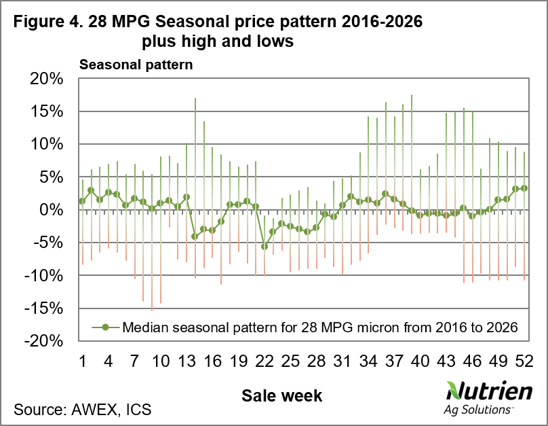
Finally, in Figure 4 the seasonal price pattern for the 28 MPG is shown. Its pattern is different, holding up until October and then dropping by around 5%, before the median pattern stages a recovery and then drops again late in the year as the seasonal peak in crossbred wool volume overcomes price. A 5% fall equates to 47 cents for the 28 MPG on the closing July quote.
The general rule for merino combing fleece wool (which is the focus of the AWEX MPGs) is that prices are lower in the spring and then pick up in the second half of the season. That is the norm, driven mainly by the supply chain. In the absence of market intelligence to suggest otherwise (such as super confident spinners flagging strong demand – something we usually hear of after the event) the median seasonal price patterns offer a guide to price patterns we can expect.
Seasonal price patterns offer useful rules of thumb as what to expect in terms of prices during the season, keeping in mind they are a guide both for price and timing not specific forecasts. Given the uncertainty about demand present in the supply chain, a median fall in price during the spring of 5% would be a “soft landing” for greasy wool prices following a season of strong price rises.

Andrew Woods is the founder of Independent Commodity Services providing tailored insights to growers, brokers, traders and exporters, with decades of experience, Andrew’s analysis bridges practical farming knowledge and market expertise, with a strong focus on the wool industry.

 Andrew Woods: Oct 14, 2026
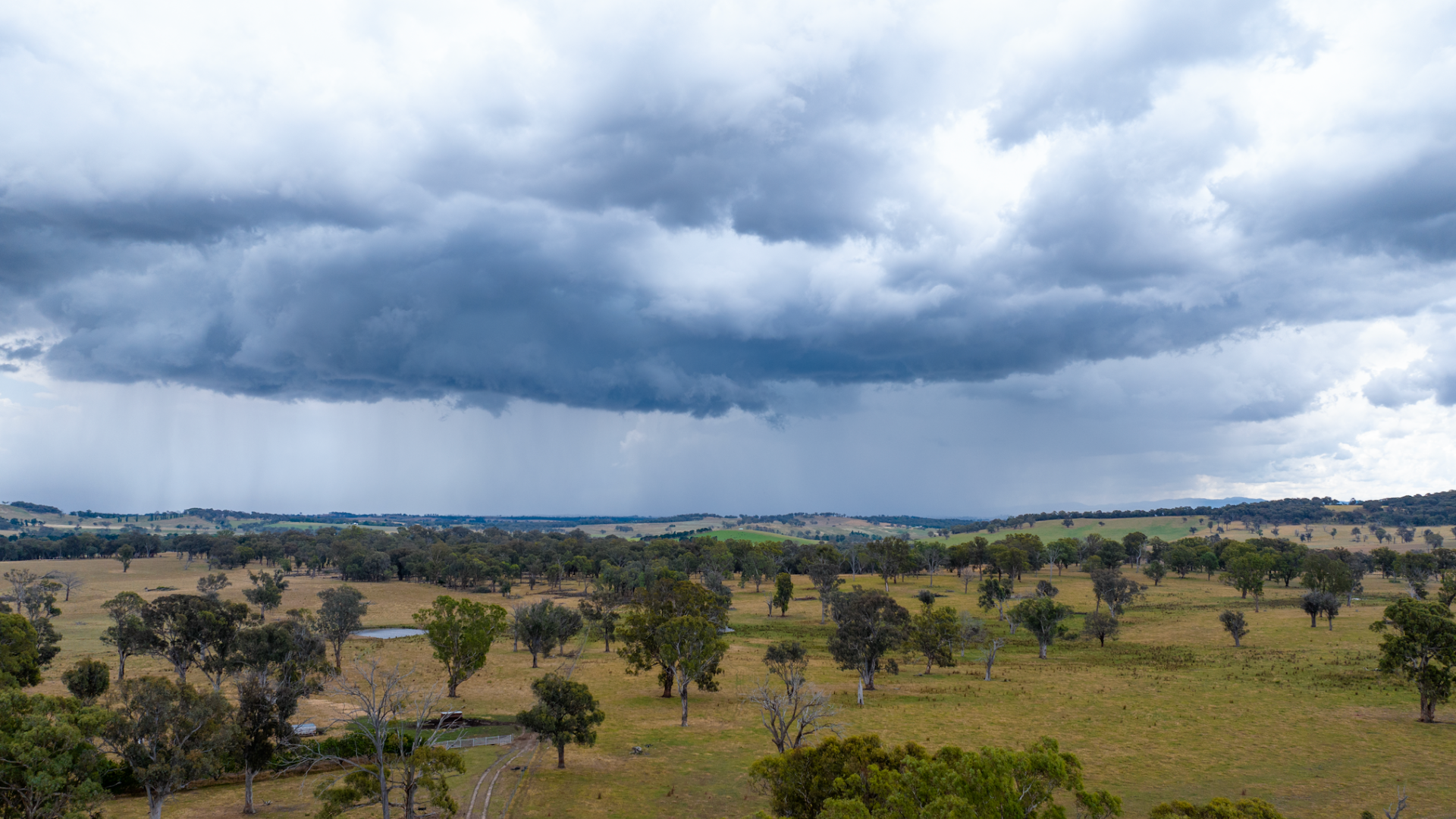
The forecast is looking promising for vast parts of Queensland and Northern NSW for the coming week.If you are looking for rain, of course.Rain will...
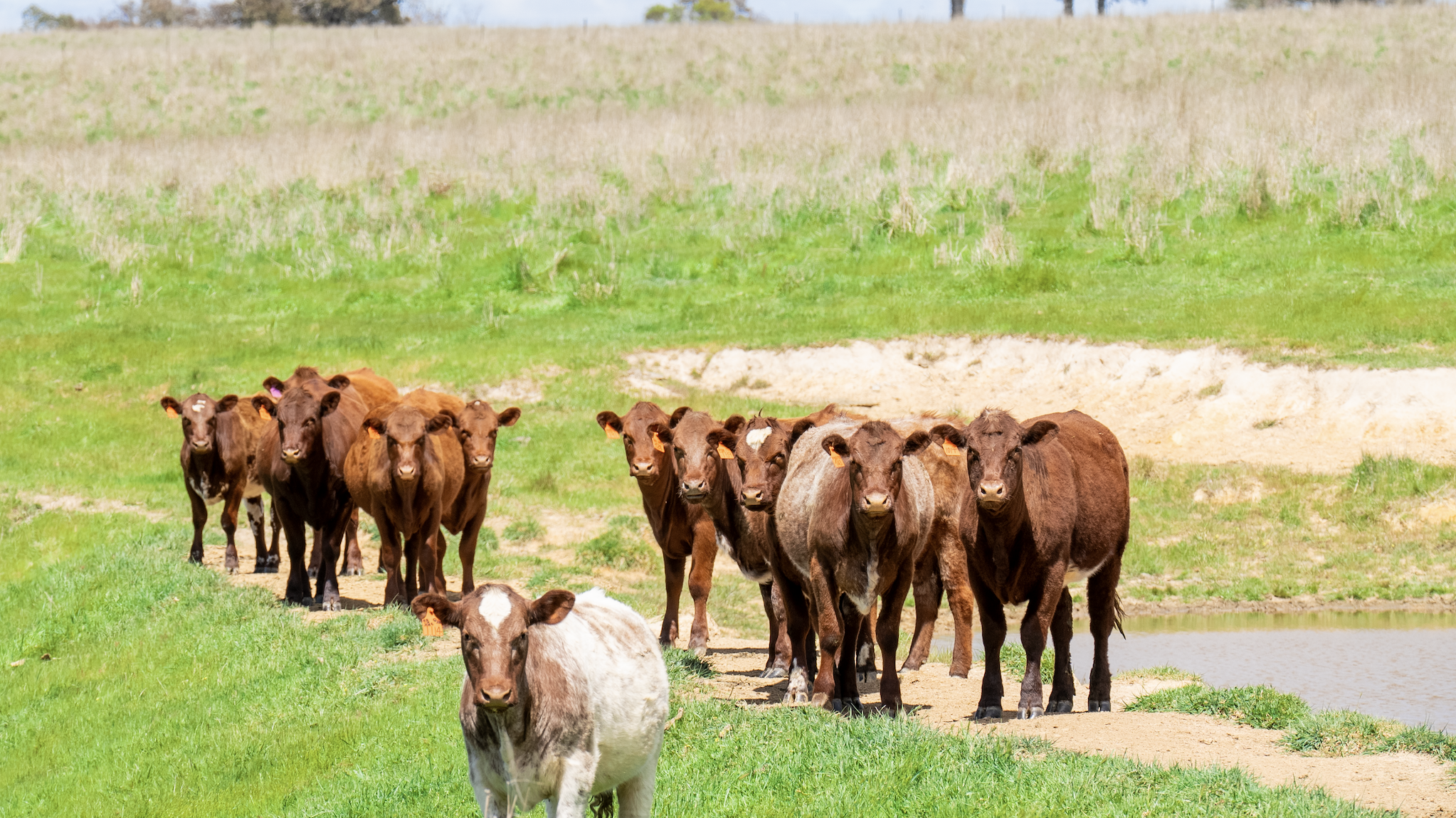
Grass is setting the pace in the cattle market, with restockers outbidding feedlots and processors on AuctionsPlus last week.
 Natasha Lobban: Oct 8, 2026
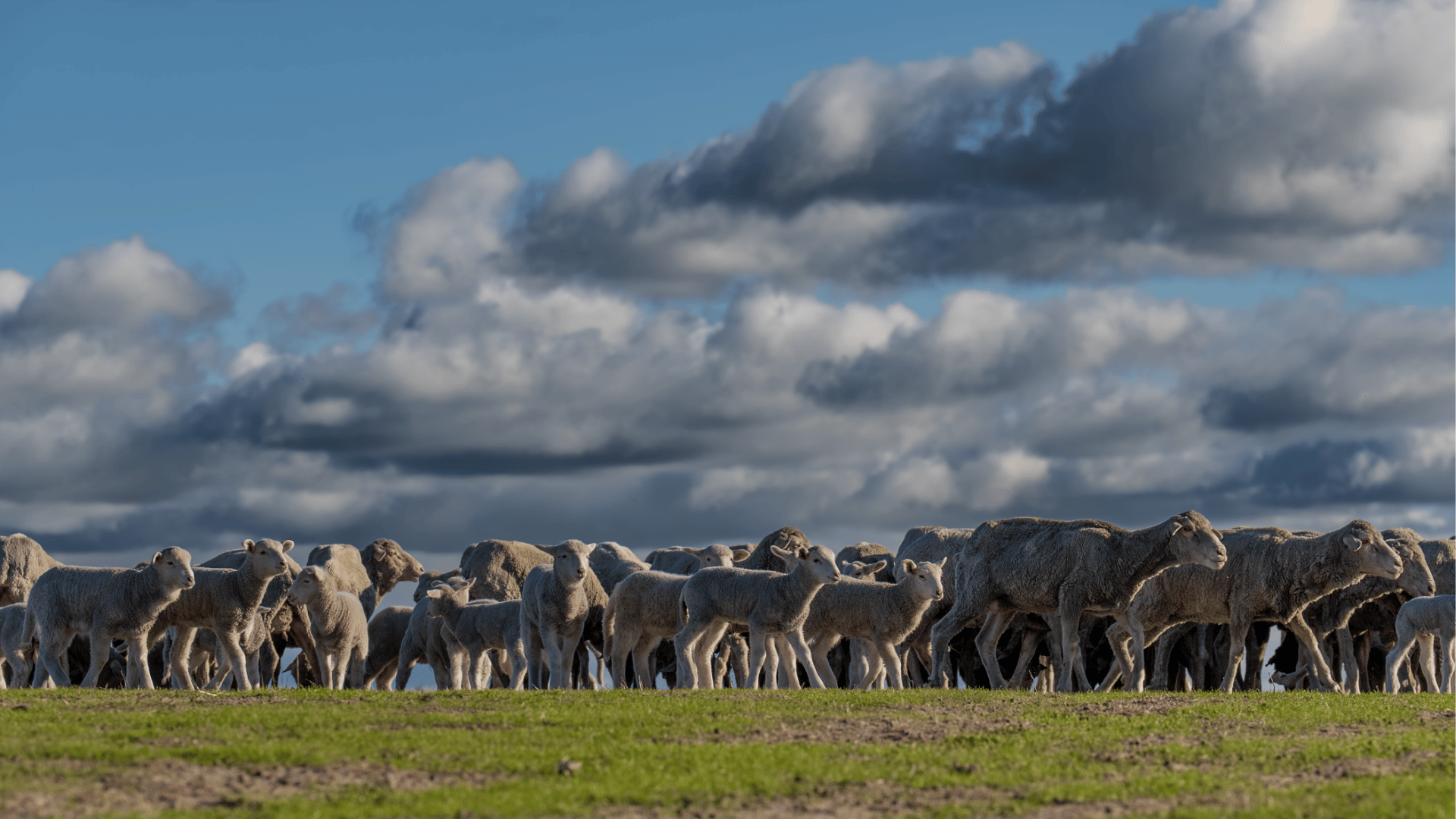
AuctionsPlus has recorded its biggest September for new season lambs in the past decade, with 218,871 head offered across the month.