
Northern rain and the cost of freight
 Andrew Woods: Oct 14, 2026
The forecast is looking promising for vast parts of Queensland and Northern NSW for the coming week.If you are looking for rain, of course.Rain will...
The Restocker Lamb Indicator reached a new record last week, climbing to 1,173c/kg carcase weight (cwt) on Wednesday – 10¢/kg cwt above the previous record set in mid-November 2025. This reflects a clear improvement in sentiment across southern production regions.
Editor's note: The AuctionsPlus Restocker Lamb Indicator (ARLI) also hit new highs last week. Tuesday's AuctionsPlus Commercial Sheep and Lamb sales was strong throughout, with clearance rates holding firm at 95%. Competition remained steady across most categories, while the ARLI lifted 13.84c to 1,360c/kg DW, reflecting ongoing interest in lighter lamb and store types. Total offerings reached 53,090 head, back 9% week-on-week.
The change comes after a prolonged run of below-average rainfall. Many southern producers have been managing dry conditions for the past two years. While a spring break helped lift pasture availability, it didn’t hold. December and January returned to below-average rainfall, leaving many areas with tightening feed and patchy pasture growth.
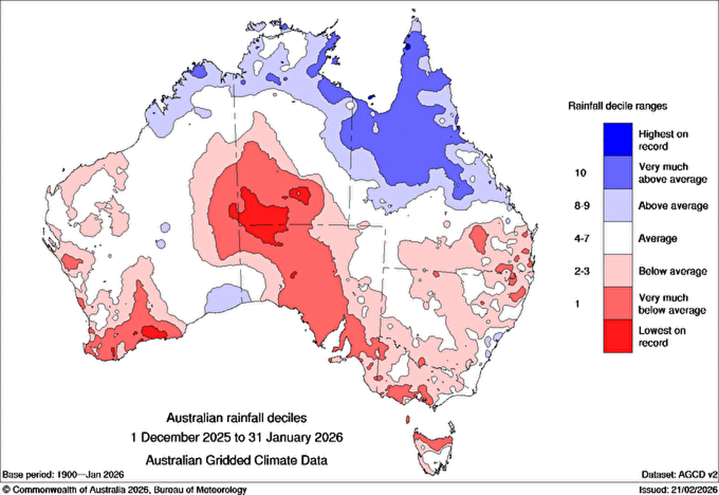
Source: BOM
In southern NSW, producers responded early in 2026 with higher-than-usual yardings as they managed feed availability following reduced and uneven rainfall since October 2025. With more lambs moving through yards and restocker competition softer than during the November peak, the indicator eased back through summer.
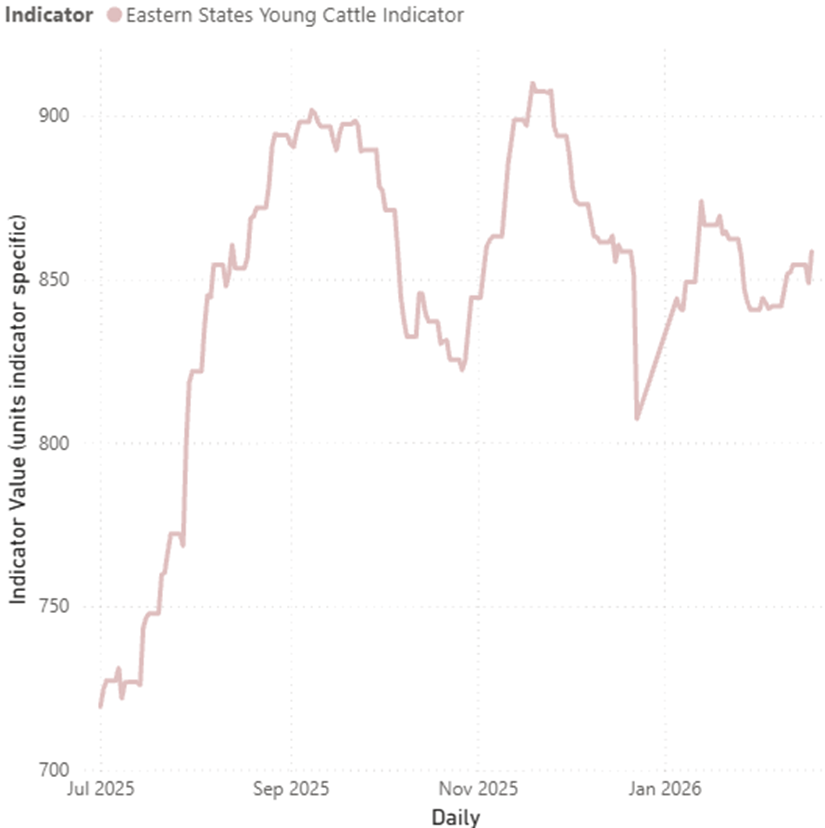
Source: BOM
February has since shifted the market mood. Many of the previously affected areas received up to 200mm of rain, improving short-term feed prospects and changing selling decisions. With confidence lifting, the restocker market tightened quickly and demand strengthened. The indicator rose from 1,070¢/kg cwt at the beginning of February to the new record 1,173¢/kg cwt this week, demonstrating how quickly restocker demand can respond when the seasonal outlook improves.
Market reporting continues to note a good supply of finished lambs over 24kg, supported by the continued adoption of feedlots and confinement feeding. These systems are helping maintain a flow of well-finished lambs even when paddock feed is variable. However, while finished supply has held up, restocker offerings have tightened. Restocker yardings eased by 14,804 head week-on-week, reducing the number of suitable lines available to buyers and intensifying competition.
Buyer activity has also been a feature. Demand from backgrounders has increased, with Victorian and SA buyers more active in the market. Combined with improved seasonal conditions in parts of the south, that additional buying pressure has contributed to the new price record and reinforced the market’s sensitivity to both rainfall signals and short-term supply changes.

 Andrew Woods: Oct 14, 2026
The forecast is looking promising for vast parts of Queensland and Northern NSW for the coming week.If you are looking for rain, of course.Rain will...
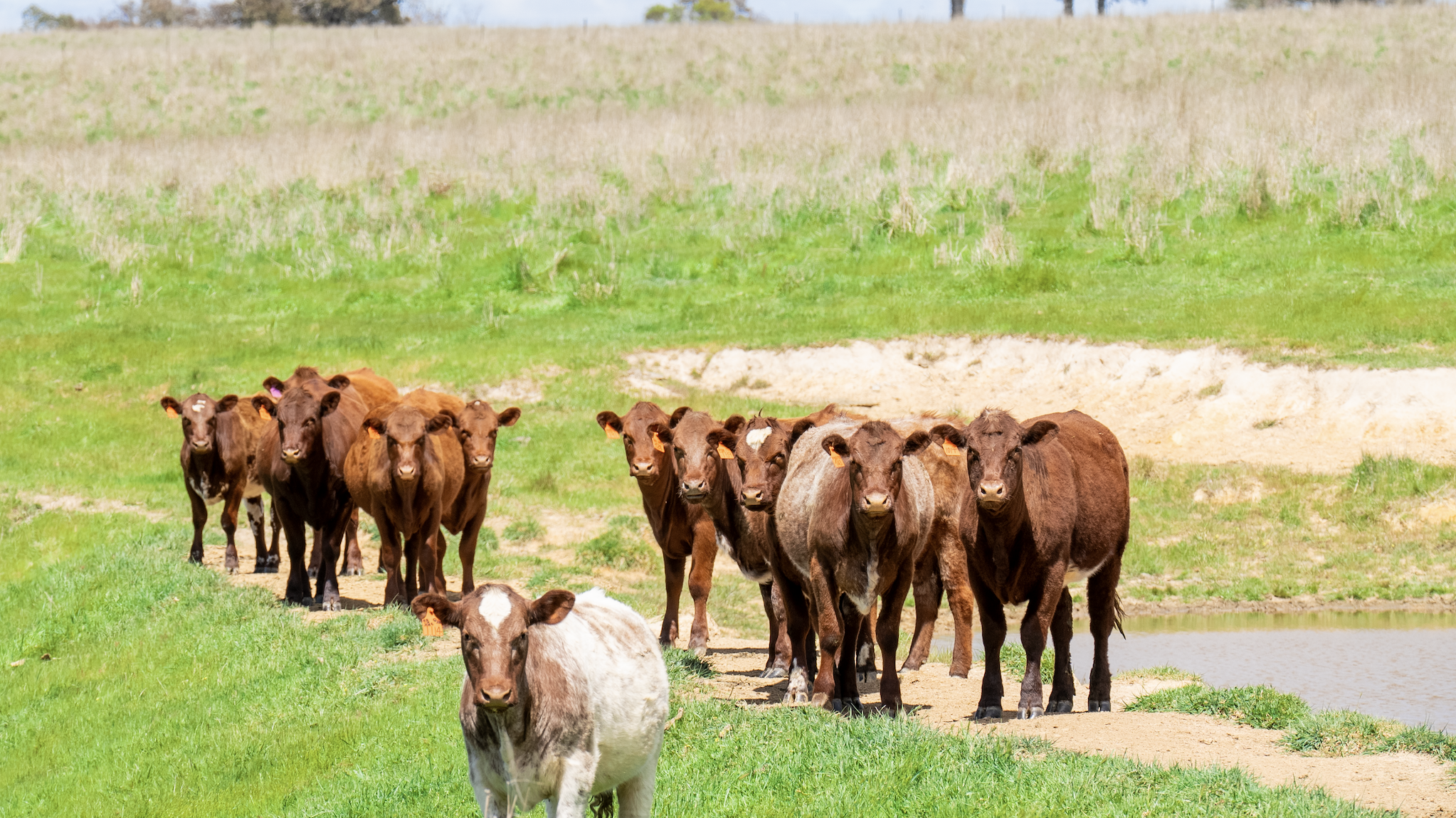
Grass is setting the pace in the cattle market, with restockers outbidding feedlots and processors on AuctionsPlus last week.
 Natasha Lobban: Oct 8, 2026
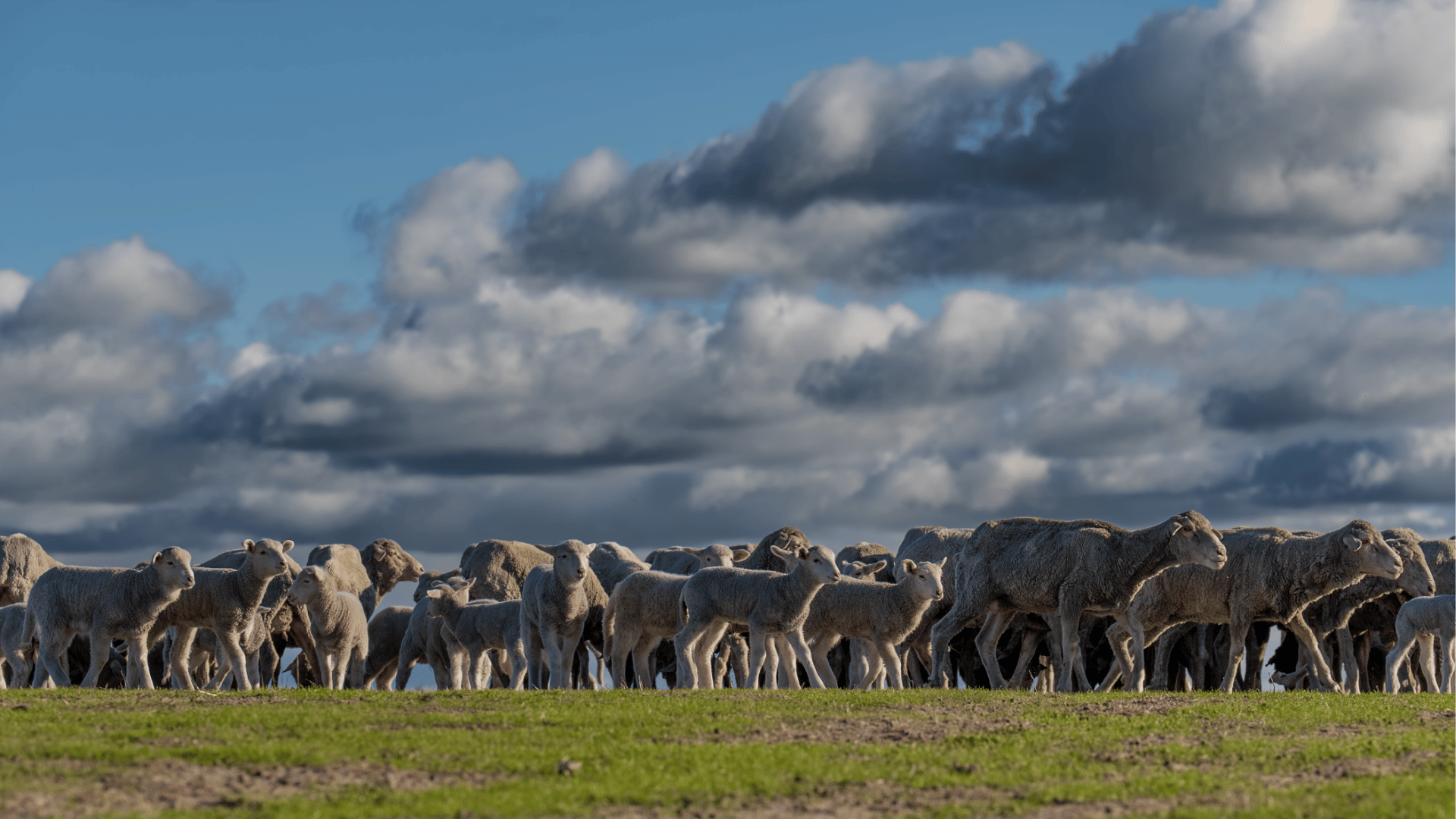
AuctionsPlus has recorded its biggest September for new season lambs in the past decade, with 218,871 head offered across the month.