
2 min read

Lamb and mutton supply to tighten but can prices rise?

Lamb and mutton supply to tighten but can prices rise?
Pic: AgriShots
Lamb and mutton supply to tighten but can prices rise?
2:56

The conflict in the Middle East has had minimal impact on local grain or livestock prices as of yet, especially sheep meat. Forward pricing for lambs has been released, further fortifying store lamb prices. 

As outlined a fortnight ago there are some potential clouds on the horizon for lamb demand. The issues with lamb and sheep meat being turned back from the Middle East, and extreme increases in freight costs. This news hit the mainstream media on the weekend (The Australian), but we are yet to see an impact on markets locally.

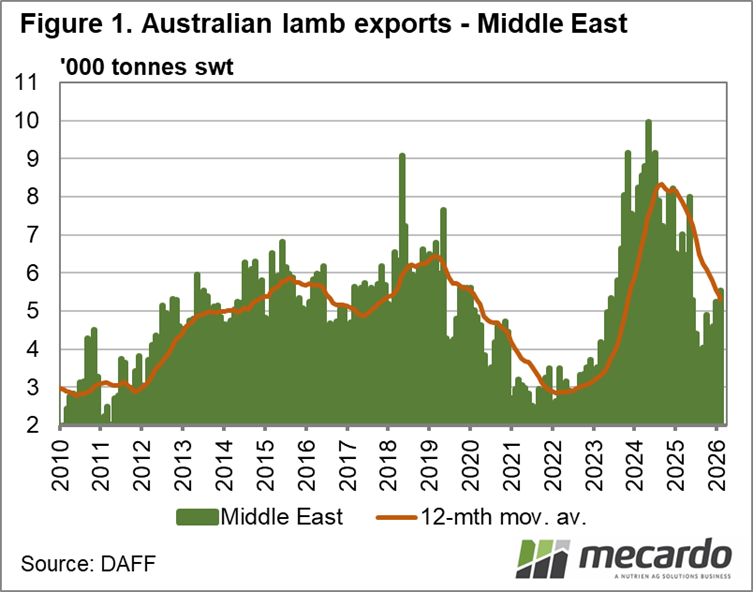
Figure 1 shows that up until February we were still exporting plenty of lamb to the Middle East. In January and February lamb exports were down 21% on 2025 but were still well above the 2021-23 period. Mutton exports to the Middle East in the first two months of the year were up 6% on 2025.

The Middle East accounted for 18.6% on lamb exports in January and February while mutton was a much higher 37%. There might have been a shift from lamb to mutton in exports to the Middle East due to the extreme lamb prices. We saw this during the record price period of the last flock rebuild.

Despite having potential large exposure to Middle East trade disruptions lamb and mutton markets have defied gravity to gain ground over the last month. There have been some public holidays which have impacted slaughter, but it seems the strength of the US, Chinese and Southeast Asian markets, along with growth in the EU and UK are supporting prices.

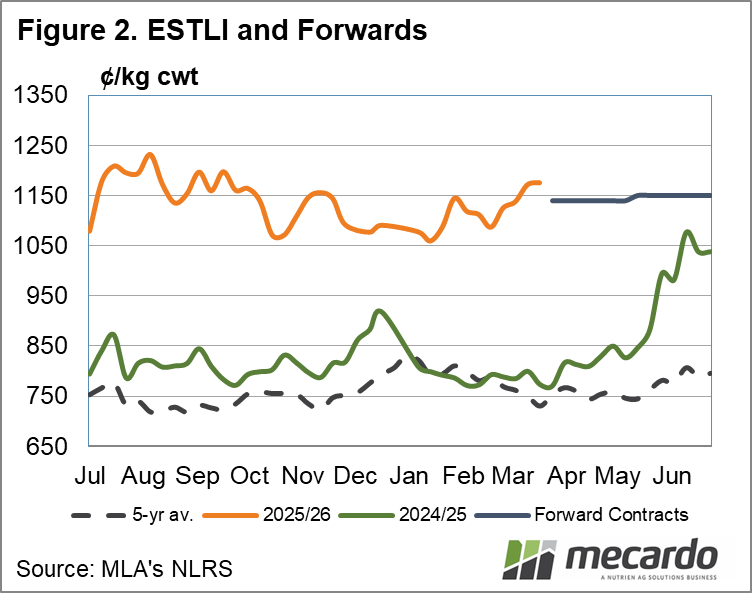
Some forward pricing for lambs is starting to appear, with processors looking to lock in lamb supply around current rates. Figure 2 shows the Eastern States Trade Lamb Indicator (ESTLI) along with some forward pricing.

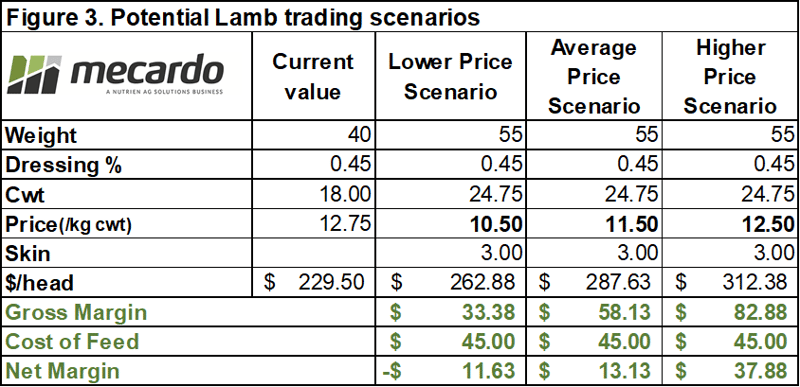
Looking at basic lamb trading scenarios in figure 3 we can see that prices need to be close to current values to make feeding lambs work. Store lamb prices have had a boost from record rains in pastoral and some higher rainfall sheep country, at a time when a flock rebuild is underway in some key sheep areas.

What does this mean?

Lamb and mutton demand might have eased, but it has been counteracted by tighter supply, and store lamb demand. Rain in key sheep areas which have missed out thus far, in southwest Victoria and northeast NSW could see further tightening but given trade disruptions processors may not have the capacity to pay more.


The Bottom Line

  • Trade disruptions are yet to impact lamb or mutton prices.
  • Forward pricing suggests price will continue to move sideways into winter.
  • Supply will likely tighten further but processors may not have capacity to pay more.

Nutrien Ag Solutions Registered - GradientAngus Brown brings over 20 years of expertise analysing Australian agricultural markets, and also runs a mixed farming operation in Hamilton, Victoria.


Lamb and mutton supply to tighten but can prices rise?

Lamb and mutton supply to tighten but can prices rise?

The conflict in the Middle East has had minimal impact on local grain or livestock prices as of yet, especially sheep meat. Forward pricing for lambs...

Read More >
Red meat supply cycle is starting to shift

Red meat supply cycle is starting to shift

Australia’s livestock outlook over the next couple of years is beginning to take shape, and the latest ABARES Agricultural Commodities report (March...

Read More >
Local supply issues causing a spread

Local supply issues causing a spread

In the midst of a conflict driven fuel crisis, and the wide-ranging impacts on the supply chain and logistics the cattle market has remained...

Read More >